




Product description
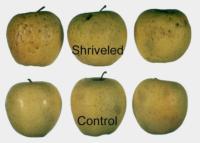
Golden Delicious apples are particularly susceptible to water loss. Weight loss can be as high as 3 to 6%. Rapid cooling, storage of fruit with plastic bin liners, and well-designed refrigeration equipment will reduce water loss.
Maturity and Quality
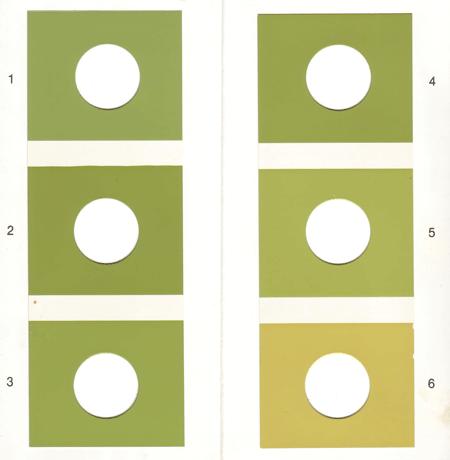
Color change from dark green to light green or yellowish-green. Firmness of 17 pounds-force, 20 to 40% of cortex clear of starch. Generally about 135 to 150 days from full bloom.
- Firmness, crispness, lack of mealiness
- Flavor, including soluble solids, titratable acidity and flavor volatiles
- Freedom from defects such as bruising, decay, stem or blossom-end cracks, bitter pit, scald, internal browning, or shrivel
Postharvest Handling and Storage
0°C ± 1°C (32°F ± 2°F)
Freezing temperature: -1.7°C (29°F)
90-95%
| Temperature | 0°C (32°F) | 5°C (41°F) | 10°C (50°F) | 20°C (68°F) |
|---|---|---|---|---|
| ml CO2/kg·h | 3-6 | 4-8 | 7-12 | 15-30 |
To calculate heat production multiply ml CO2/kg·hr by 440 to get Btu/ton/day or by 122 to get kcal/metric ton/day.
1 Higher rates for riper apples.
| Temperature | 0°C (32°F) | 5°C (41°F) | 10°C (50°F) | 20°C (68°F) |
| µl/kg·h | 1-10 | 2-25 | 5-60 | 20-150 |
Ethylene stimulates ripening. Mixed results on the benefits of scrubbing ethylene from storage rooms, depending on harvest maturity, and duration and type of storage (air or CA).
Fruit to be stored longer than one month benefit from CA storage in terms of retention of flesh firmness, acidity, and skin color. CA storage potential is up to 10 months (vs. 6 months in air).
Recommended atmospheres: 1 to 3% O2 + 1.5 to 3% CO2
Physiological and Physical Disorders
Shrivel. Golden Delicious apples are particularly susceptible to water loss. Weight loss can be as high as 3 to 6%. Rapid cooling, storage of fruit with plastic bin liners, and well-designed refrigeration equipment will reduce water loss.
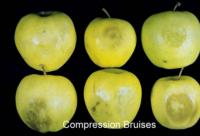
Bruising. Can be excessive, especially for Golden Delicious where bruises are more visible. Gentle handling is important.
Bitter Pit. Sunken brown spots on the skin, especially at the calyx end, related to low calcium concentrations in the apple. Best controlled by calcium sprays prior to harvest and calcium dips prior to cold storage. Apply field sprays under rapid drying conditions to avoid russeting. Reduced incidence with controlled atmosphere storage.
Superficial Scald. Browning of the skin which develops in cold storage. Susceptibility of Golden Delicious is low. Controlled atmosphere storage delays onset. Diphenylamine used infrequently; follow label rates.
Controlled Atmosphere Damage. Oxygen levels below 1% and CO2 above 15% may induce off-flavors due to fermentative metabolism. Other symptoms of CO2 injury include partially sunken brown lesions on skin or internal browning and cavities.
Pathological Disorders
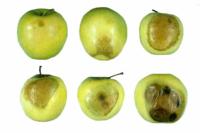
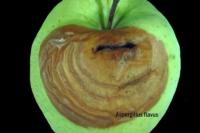
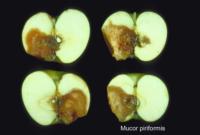
Moldy Core. Caused by several fungi including Alternaria sp., Fusarium sp., Aspergillus and Penicillium. Golden Delicious apples are particularly susceptible because of the open or deep sinus cavity. Drenching can increase the incidence of moldy core.
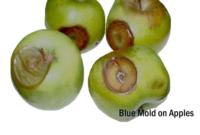
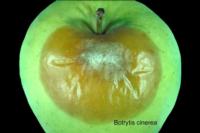
Blue Mold, Gray Mold. The two most important postharvest diseases of Golden Delicious apples are caused by Penicillium expansum and Botrytis cinerea. Both fungi are wound pathogens. Sanitation is critical to control of these diseases. Drenching can spread spores of Penicillium and Botrytis to wounds from harvest operations. Use of fungicides during drenching may reduce decay.
References
References from scientifically validated sources will be added in the future.