




Product description
Maturity and Quality
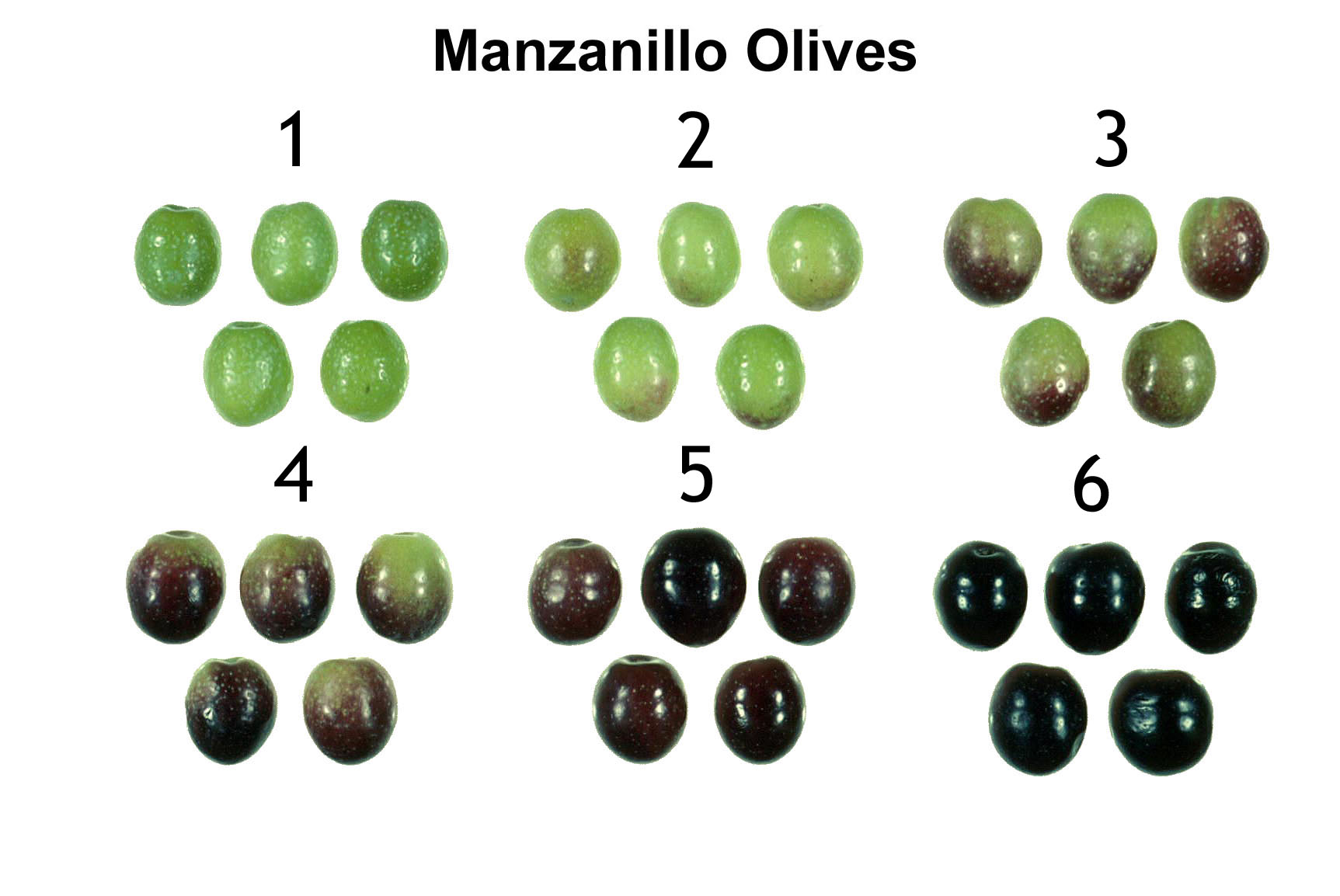
Green olives. Size and color (even, pale green with a minimum of whitish spots (lenticels) through a straw color. An olive is considered mature if it exudes a characteristic white juice when squeezed.
Black olives. Color, removal force; fruits reach this stage about 3-4 months after the green stage.
Green olives. Color; freedom from mechanical damage, shrivelling, surface blemishes, scale and other insect injury, and decay. These olives are processed according to the California black-ripe style or Spanish green style canned olives.
Black olives. Color, freedom from defects, oil content (12 to 25% depending on cultivar). These are processed (Greek or Italian style) or used for oil extraction.
Postharvest Handling and Storage
5-7.5°C (41-45.5°F); temperatures below 5°C (41°F) cause chilling injury of fresh olives.
90-95%
| Temperature | 5°C (41°F) | 7.5°C (45.5°F) | 10°C (50°F) | 20°C (68°F) |
| Range (ml CO2/kg·hr) | 5-10 | 8-12 | 12-16 | 20-40 |
To calculate heat production multiply ml CO2/kg·hr by 440 to get Btu/ton/day or by 122 to get kcal/metric ton/day.
Less than 0.1 (green olives) or 0.5 (black olives) µl ethylene/kg·hr at 20°C (68°F).
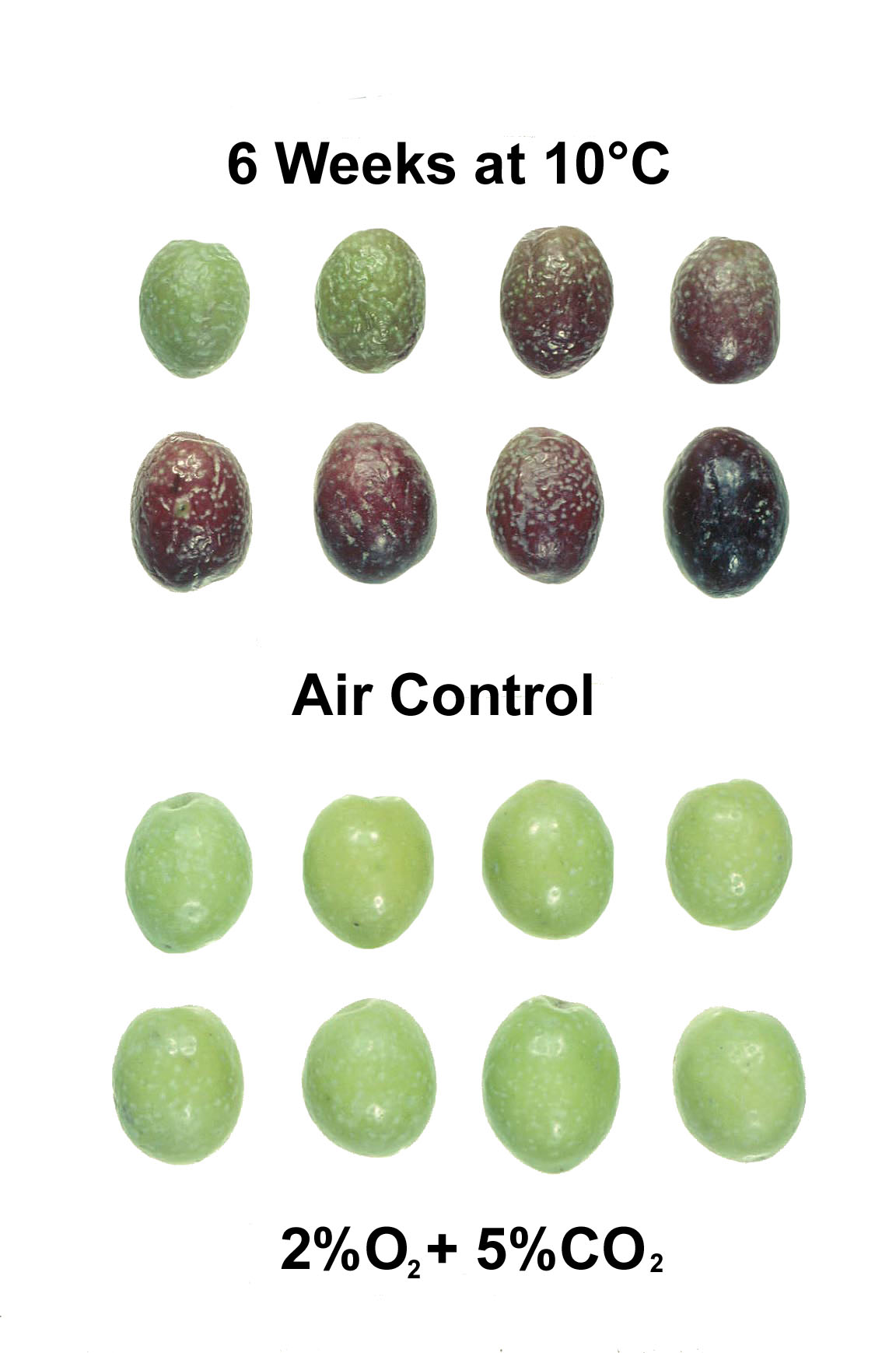
- Optimum CA: 2-3% O2+ 0-1% CO2; delays senescence and softening for up to 12 weeks at 5°C (41°F) or 9 weeks at 7.5°C (45.5°F)
- O2 below 2% can cause off-flavors
- CO2 greater than 5% may increase the severity of chilling injury if olives are kept below 7.5°C (45.5°F)
Note: The above information is for fresh green olives; fresh black olives should be processed as soon after harvest as possible.
Temperature & Controlled Atmosphere Photos
Title: CA Effects. Photo Credit: Don Edwards, UC Davis |
Title: CO2 Injury. Photo Credit: Don Edwards, UC Davis |

Physiological and Physical Disorders
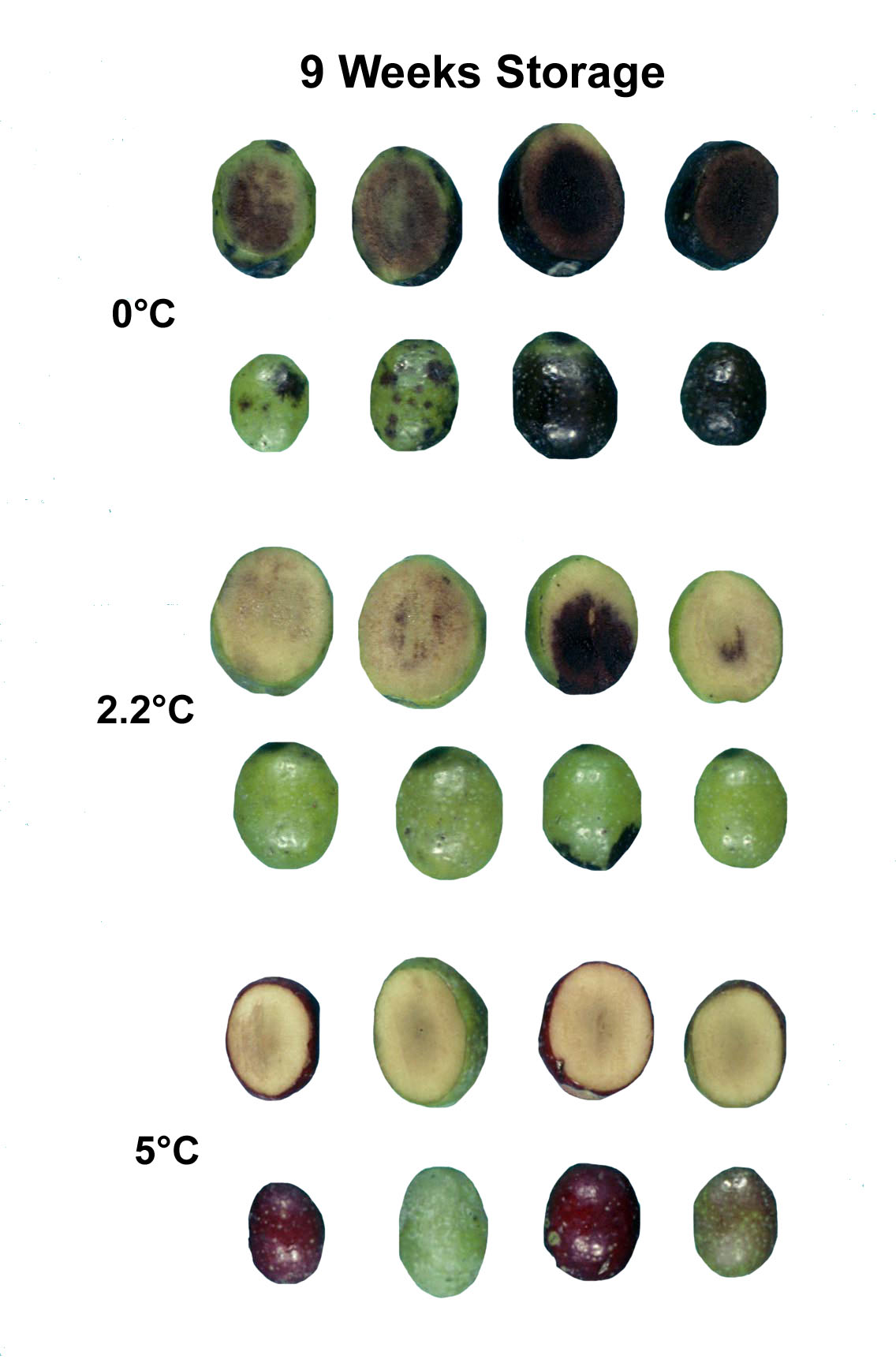
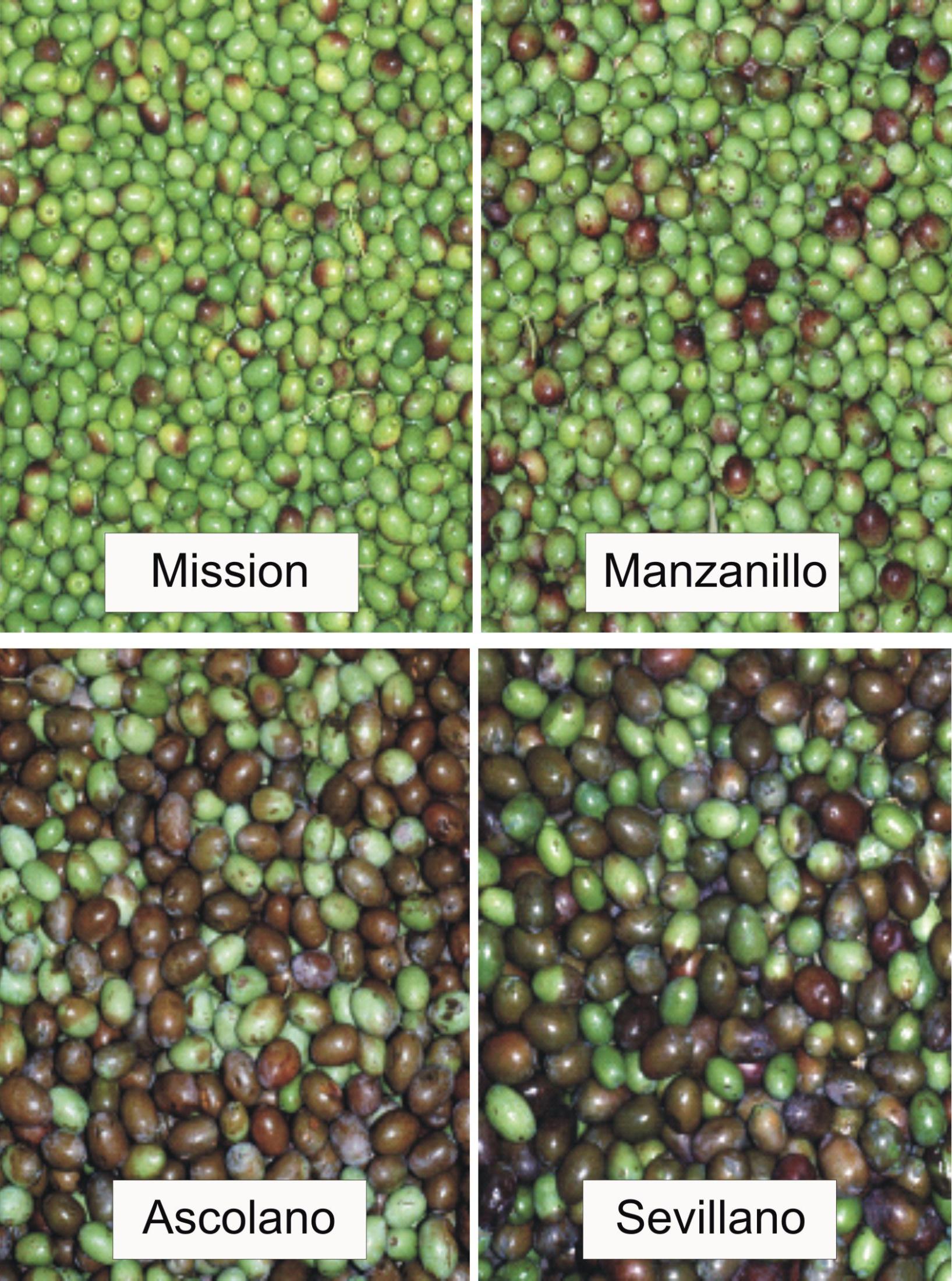
Chilling injury (CI). CI can be a major cause of deterioration if fresh olives are stored before processing for longer than 2 weeks at 0°C (32°F), 5 weeks at 2°C (36°F), or 6 weeks at 3°C (38°F). Symptoms include internal browning that begins in the flesh around the pit and radiates outward toward the skin as time progresses. Skin browning indicates an advanced state and/ or greater CI severity. The order of cultivar susceptibility to CI is Sevillano (most susceptible) - Ascolano - Manzanillo - Mission (least susceptible).
Nailhead. This disorder is characterized by surface pitting and spotting. It results from the death and collapse of epidermal cells, which create air pockets underneath the fruit skin. Symptoms are observed on olives kept at 10°C (50°F) for 6 weeks or longer or 7.5°C (45.5°F) for 12 weeks or longer.
Carbon dioxide injury. Symptoms (internal browning and increased decay incidence and severity) result from exposure to more than 5% CO2 for longer than 4 weeks.
Pathological Disorders
Postharvest diseases occur if the olives have been chilled (exposed to temperatures below 5°C=41°F), mechanically damaged, not cooled promptly to the optimum temperature range of 5 to 7.5°C (41 to 45.5°F), or exposed to undesirable atmospheres (above 5% CO2 and/or below 2% O2).
References
References from scientifically validated sources will be added in the future.