PTRIC Logo
Postharvest Technology Research and Information Center
Produce Facts:   Produce Facts  |  Indicadores Basicos en Espanol  |  Storing Fresh Fruits and Vegetables
About Us:   Center goals, activities, and contact  |  Endowment
Order Publications:   Order Forms  |  Sales Promotion  |  Link to DANR Sales Catalog
Publications:   Center  |  DANR  |  Perishables Handling Quarterly  |  Central Valley | Publications Organized by Topic
Calendar:   Calendar
Education:   Undergraduate  |  Graduate  |  Short Courses & Workshops
Resources:   List of Selected References  |  Resource Directory  |  Other Useful Sites
Find Experts:   Extension Specialists  |  Faculty
Site Map

Fruit Physiological Disorders: Stone Fruit

Internal Breakdown  | Skin Discoloration  | Surface Pitting and Bruising

Surface Pitting and Bruising

By Jim Thompson
 
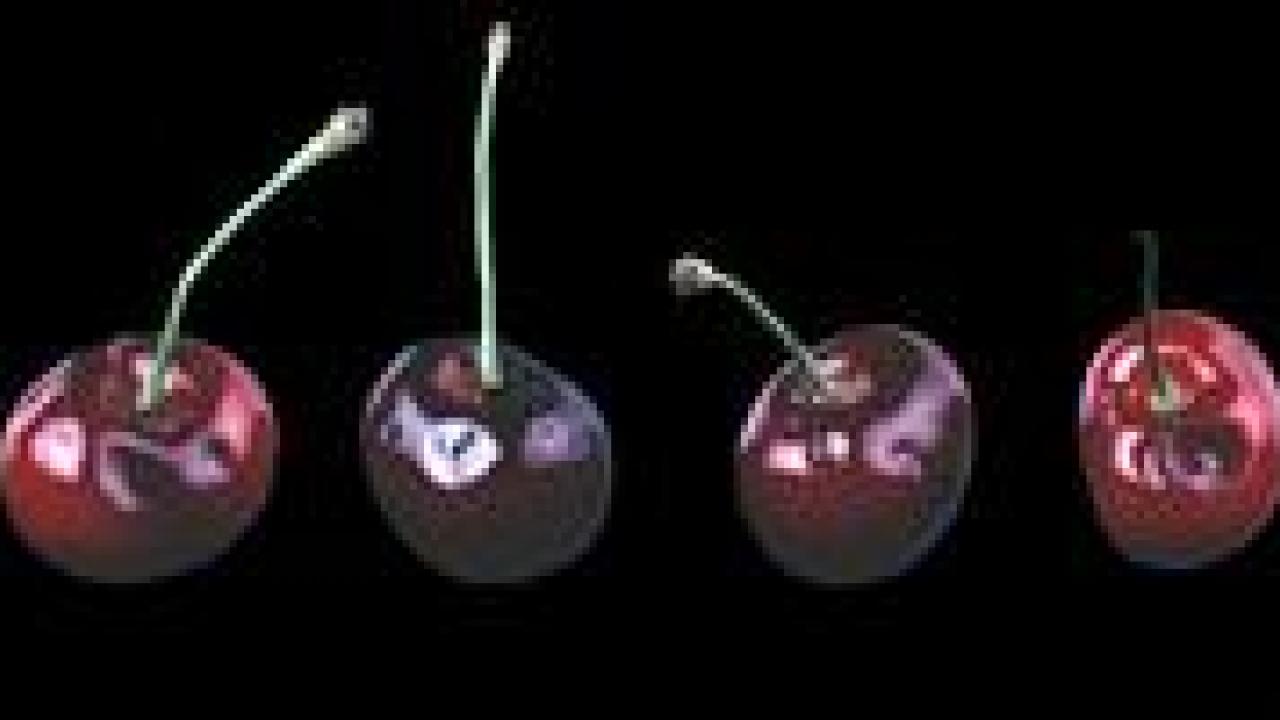
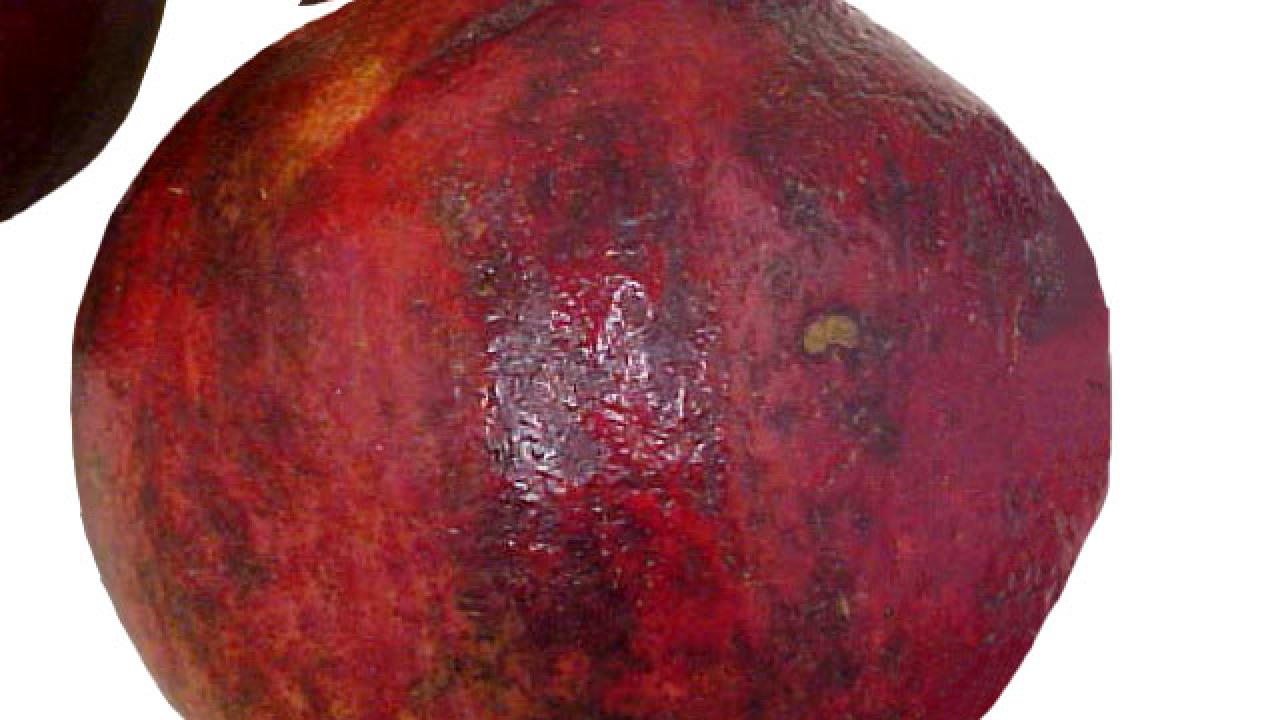
Surface pits caused by a 
drop to a rough surface. 
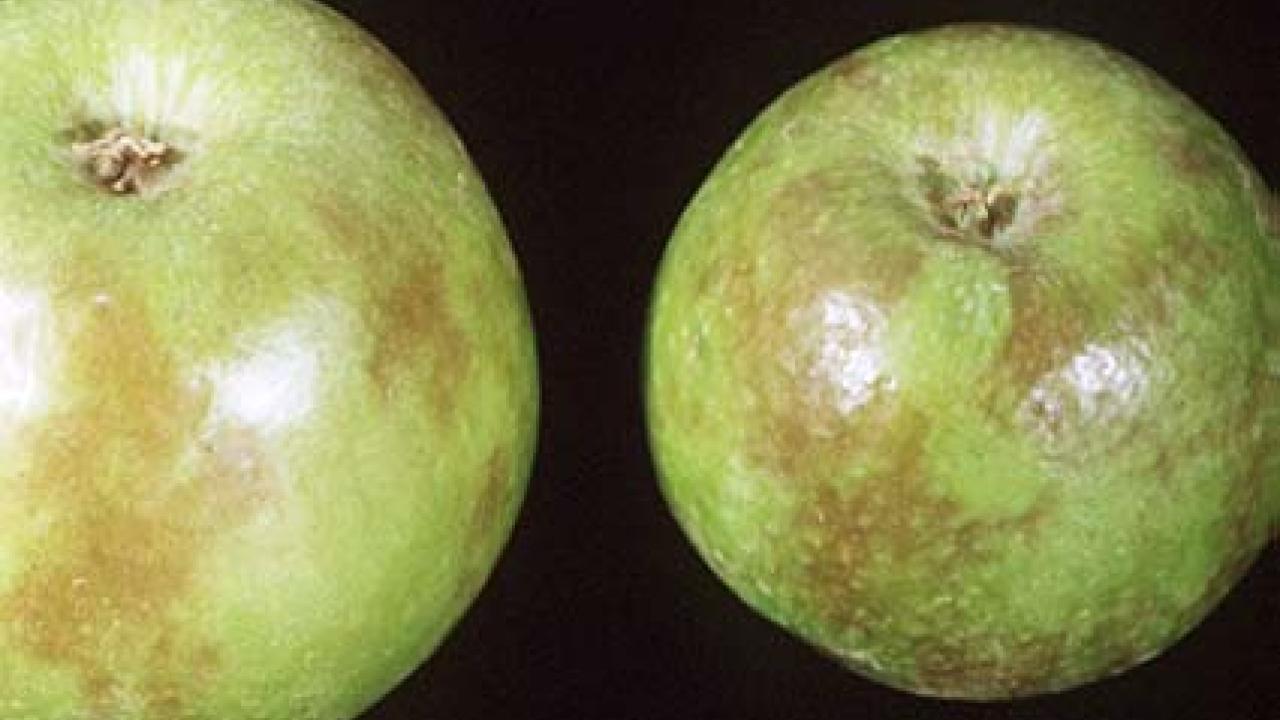
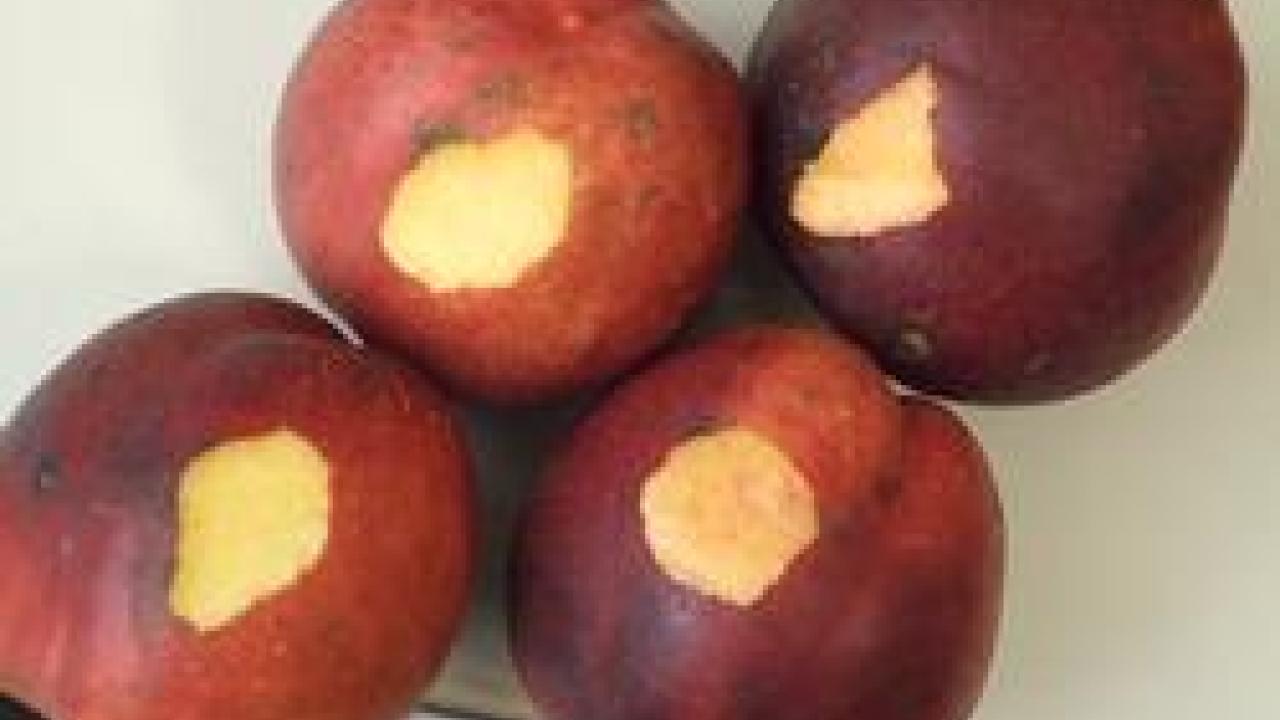
Shoulder bruises caused by 
pickers pulling on fruit 
to remove it from the tree. 

Occurence: Cherry fruits

Importance: This is a very common problem for sweet cherries. Nearly every box of packed fruit has fruit with some pitting or bruising. Pitting and bruising are leading causes of product rejection and requests for price adjustments by produce receivers.

Symptoms: Pits are small sunken areas on the fruit surface, larger flattened areas are called bruises.

Physiology: Symptoms are primarily caused by a mechanical impact or compression. Although any other mechanism that damages fruit tissue may cause similar symptoms. Damage becomes apparent after several days at room temperature or longer at lower temperatures. Pitting is associated with damage to cells near the epidermis which collapse over time. Bruising appears to be associated with injury to cells much below the epidermis. Impact damage increases cherry respiration, ethylene production, and susceptibility to decay and damaged fruit loose titratable acidity at a faster rate compared to undamaged fruit.

Control: Damage can occur during picking, handling, transport to the packinghouse, packing, or transport to market. Fruit factors such as high soluble solids concentration, warm temperature, preharvest use of gibberillic acid, and high fruit weight have been shown to reduce fruit susceptibility to damage. Postharvest pitting damage can be reduced by: 1) keeping drop heights lower than 30 cm (12") for fruit landing on a smooth surface, 2) preventing fruit from falling on rough surfaces, 3) installing padding, 4) keeping water drop heights less than 20 cm (8") in shower type hydrocoolers, and 5) using the slowest possible fruit speeds on cluster cutter machinery. Bruising is mainly caused by pickers holding fruit when they remove it from the tree. They should be trained to touch only fruit stems. Packinghouse design features that reduce pitting also minimize bruising.

References: Mitchell, F. G., G. Mayer, and A. A. Kader. 1980. Injuries cause deterioration of sweet cherries. California Agiculture 34(3):14-15. 

Search PTRIC
(enter search words)

ANR Home
UC Davis
Postharvest Technology Research Information Center Endowment Contribution graphic
Department of Plant Sciences
Mail Stop 2, Room 3047 Wickson Hall
University of California
One Shields Ave., Davis, CA 95616-8683
Send comments to postharvest@ucdavis.eduLink to Guestbook
Site Map
Copyright ©1996-2009.
Legal notices. All rights reserved.

Produce/Disorder/stone/stonesurface.shtml updated June 10, 2002