




Product description
Maturity and Quality
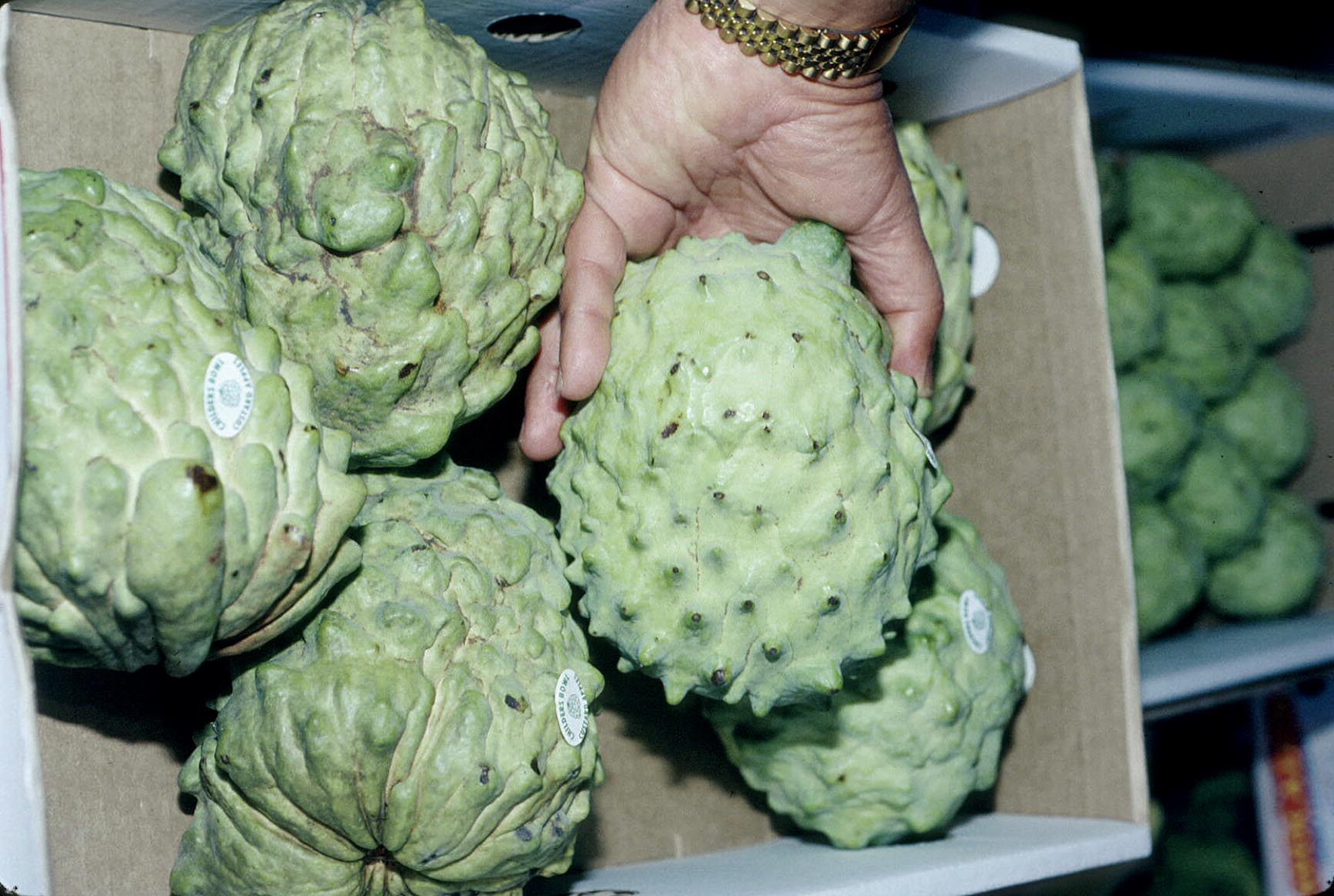
Change in skin color from dark-green to light-green or greenish-yellow is the primary maturity index for cherimoya (Annona cherimola), atemoya (Annona cherimoya X A. squamosa), sweetsop (Annona squamosa), and custard apple (Annona reticulata). Other indicators include appearance of cream color between segments on the skin and increased surface smoothness of the separate fruit carpels.
- Fruit size, color, absence of defects and decay, firmness (annona fruits are relatively soft fruits and must be handled with care to minimize bruising)
- Cherimoya, atemoya and sweetsop have high concentrations of sugars (14-15% when ripe) and moderate acidity (0.4-0.7% when ripe). They are good sources of vitamin C (45-60mg/100g) and potassium (250-500mg/100g edible portion)
Postharvest Handling and Storage
8-12°C (46-54°F) depending on cultivar, ripeness stage, and duration.
90-95%
| Temperature | 10°C (50°F) | 15°C (59°F) | 20°C (68°F) |
| ml CO2/kg·hr | 25-100 | 45-150 | 75-250 |
To calculate heat production multiply ml CO2/kg·hr by 440 to get Btu/ton/day or by 122 to get kcal/metric ton/day.
Annona fruits are climacteric fruits. High levels of ethylene (up to 100-300 µl /kg·hr, depending on cultivar) are produced during ripening at 20°C (68°F).
Exposure to ethylene (100ppm for 1-2 days) accelerates ripening of mature-green cherimoya and other annona fruits; they can ripen in about 5 days if kept at 15°C (59°F) to 20°C (68°F).
Ethylene removal can be helpful in retarding ripening of mature-green fruits.
- The optimum CA storage atmospheres range from 3-5% O2 and 5-10% CO2 Benefits include delayed ripening, lower respiration and ethylene production rates, and firmness retention
- Cherimoyas can be kept for up to 6 weeks at 10°C (50°F) in 5% O2, then ripened with good flavor at 20°C (68°F)
- Exposure to<1% O2 and/or >15% CO2 can result in development of off-flavors and uneven ripening
Physiological and Physical Disorders
Chilling injury. Exposure of annona fruits to temperatures below 8-12°C (46-54°F), depending on cultivar and ripeness stage, results in chilling injury. Symptoms include darkening and hardening of skin, pitting, failure to develop full flavor, and mealy flesh.
Splitting. In some cultivars fruit splitting occurs with advanced ripening stages and increased ethylene production rates. It has been suggested that turgor changes related to production of neutral sugars during ripening lead to movement of water from the skin and possibly receptacle to the flesh. The increase in receptacle diameter increased the stress on the flesh and skin leading to fruit splitting.
Pathological Disorders
Anthracnose. Caused by Colletotrichum gloeosporioides and appears as dark lesions and may produce pink spore-masses under high humidity conditions.
Black Canker. Caused by Phomopsis anonacearum and appears as purple spots on the fruit, which become hard and cracked followed by the development of small black bodies containing spores.
Botryodiplodia rot. Caused by Botryodiplodia theobromae and appears first purple, later pimpled with black pycnidia. The flesh becomes brown and corky.
Control Strategies
Control measures include good orchard sanitation to minimize sources of fungal spores, preharvest application of fungicides, careful handling to reduce physical damage, prompt cooling to 10°C (50°F), and subsequent maintenance of optimum temperature and relative humidity during marketing.
References
References from scientifically validated sources will be added in the future.