





Product description
Maturity and Quality
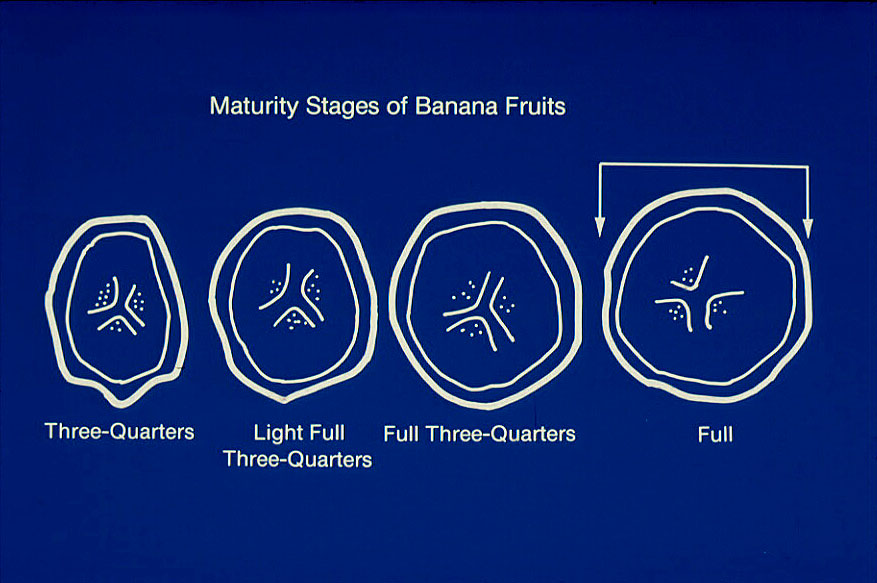
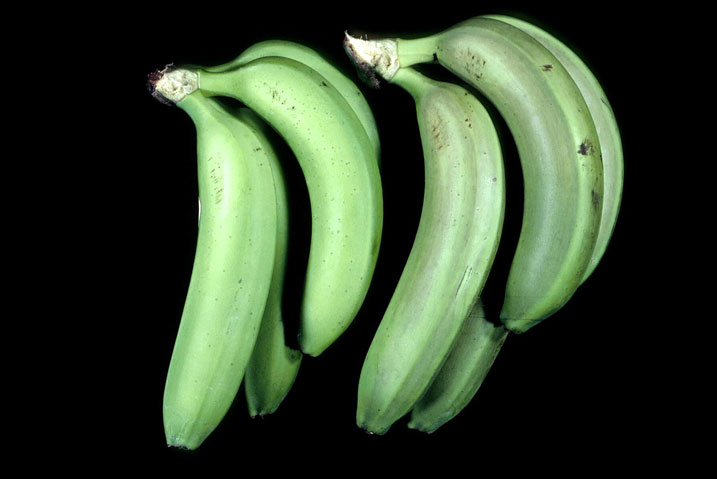
Degree of fullness of the fingers, i.e., disappearance of angularity in a cross section. Bananas are harvested mature-green and ripened upon arrival at destination markets since fruits ripened on the plant often split and have poor texture.
- Maturity (the more mature the better the quality when ripe)
- Finger length (depending on intended use and demand for various sizes)
- Freedom from defects, such as insect injury, physical damage, scars, and decay
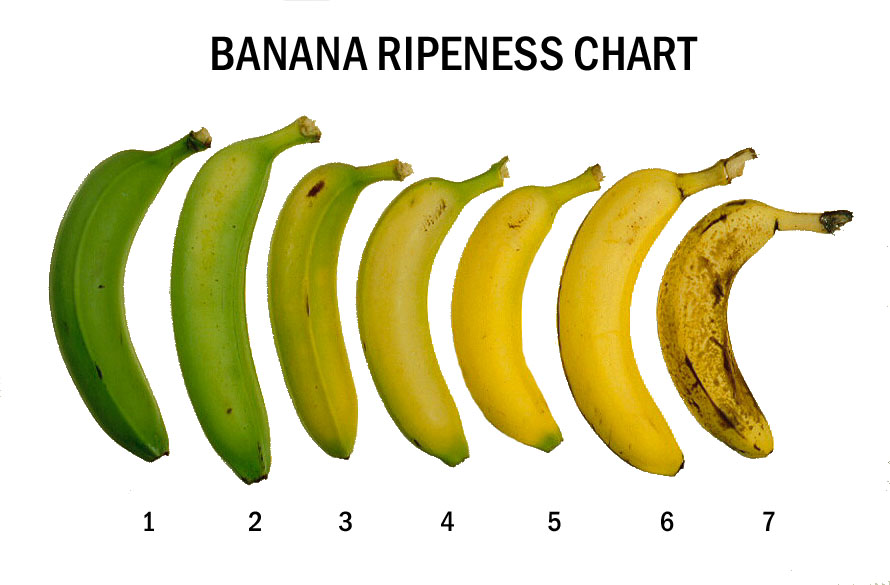
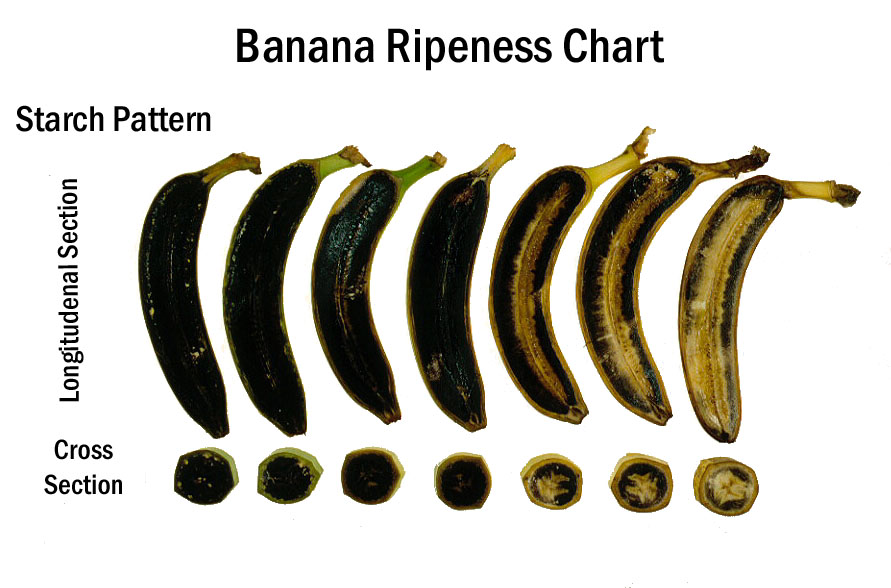
- As bananas ripen their starch content is converted into sugars (increased sweetness). Other constituents that influence flavor include acids and volatiles
Postharvest Handling and Storage
13-14°C (56-58°F) for storage and transport
15-20°C (59-68°F) for ripening
90-95%
| Temperature | 13°C (56°F) | 15°C (59°F) | 18°C (65°F) | 20°C (68°F) |
| ml CO2/kg·hr1, 2 | 10-30 | 12-40 | 15-60 | 20-70 |
1 Low end for mature-green bananas and high end for ripening bananas.
2 To calculate heat production multiply ml CO2/kg·hr by 440 to get Btu/ton/day or by 122 to get kcal/metric ton/day.
| Temperature | 13°C (56°F) | 15°C (59°F) | 18°C (65°F) | 20°C (68°F) |
| ul C2H4/kg·hr1 | 0.1-2 | 0.2-5 | 0.2-8 | 0.3-10 |
1 Low end for mature-green bananas and high end for ripening bananas
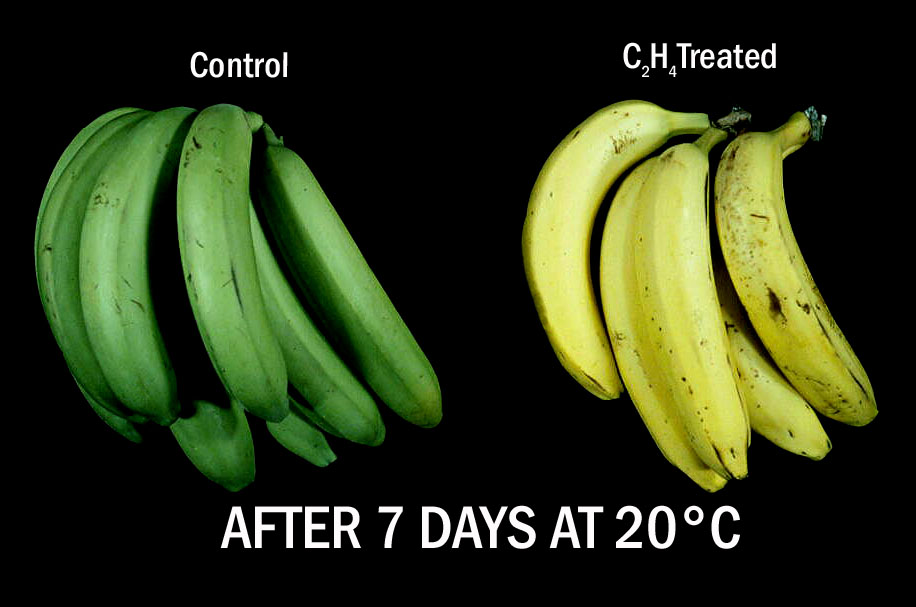
Most commercial cultivars of bananas require exposure to 100-150 ppm ethylene 24-48 hours at 15-20°C (59-68°F) and 90-95% relative humidity to induce uniform ripening. Carbon dioxide concentration should be kept below 1% to avoid its effect on delaying ethylene action. Use of a forced-air system in ripening rooms assures more uniform cooling or warming of bananas as needed and more uniform ethylene concentration throughout the ripening room.
- Optimum: 2-5% O2 and 2-5% CO2
- CA delays ripening and reduces respiration and ethylene production rates
- Postharvest life potential of mature-green bananas: 2-4 weeks in air and 4-6 weeks in CA at 14°C (58°F)
- Exposure <2% O2 and/or >7% CO2 may cause undesirable texture and flavor
- Use of CA during transport to delay ripening has facilitated picking bananas at the full mature stage
Temperature & Controlled Atmosphere Photos
Title: Respiration. Credits: Don Edwards, UC Davis |
Title: Effects of ethylene. Credits: Don Edwards, UC Davis |

Physiological and Physical Disorders
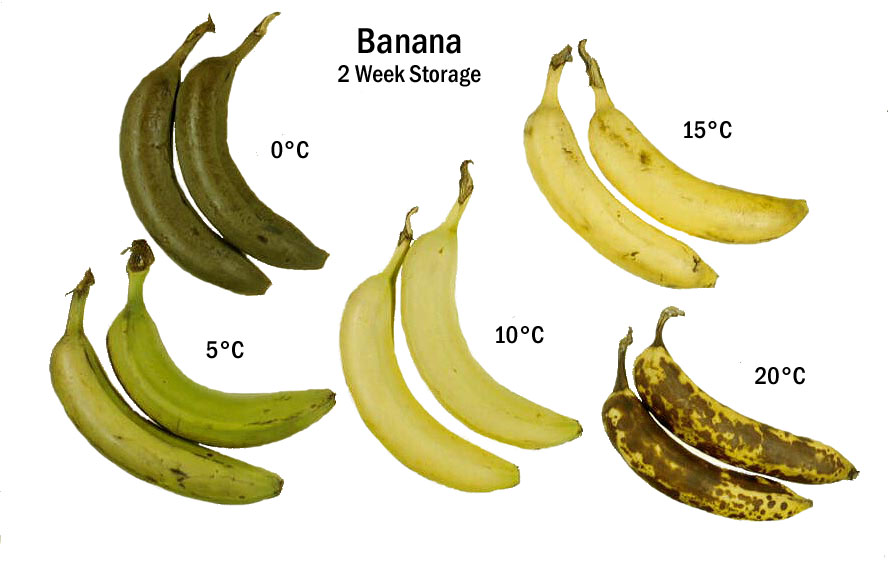
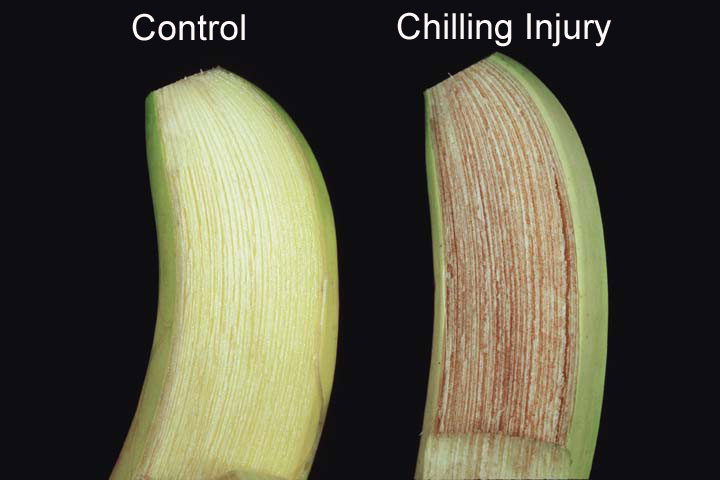
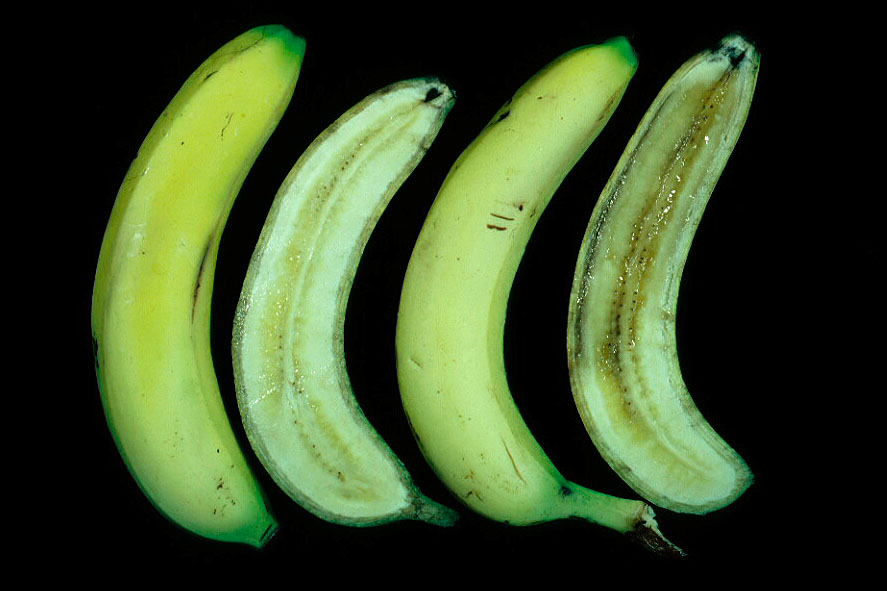
Chilling injury. Symptoms include surface discoloration, dull or smokey color, subepidermal tissues reveal dark-brown streaks, failure to ripen, and, in severe cases, flesh browning. Chilling injury results from exposing bananas to temperatures below 13°C (56°F) for a few hours to a few days, depending on cultivar, maturity, and temperature. For example, moderate chilling injury will result from exposing mature-green bananas to one hour at 10°C (50°F), 5 hours at 11.7°C (53°F), 24 hours at 12.2°C (54°F), or 72 hours at 12.8°C (55°F). Chilled fruits are more sensitive to mechanical injury.
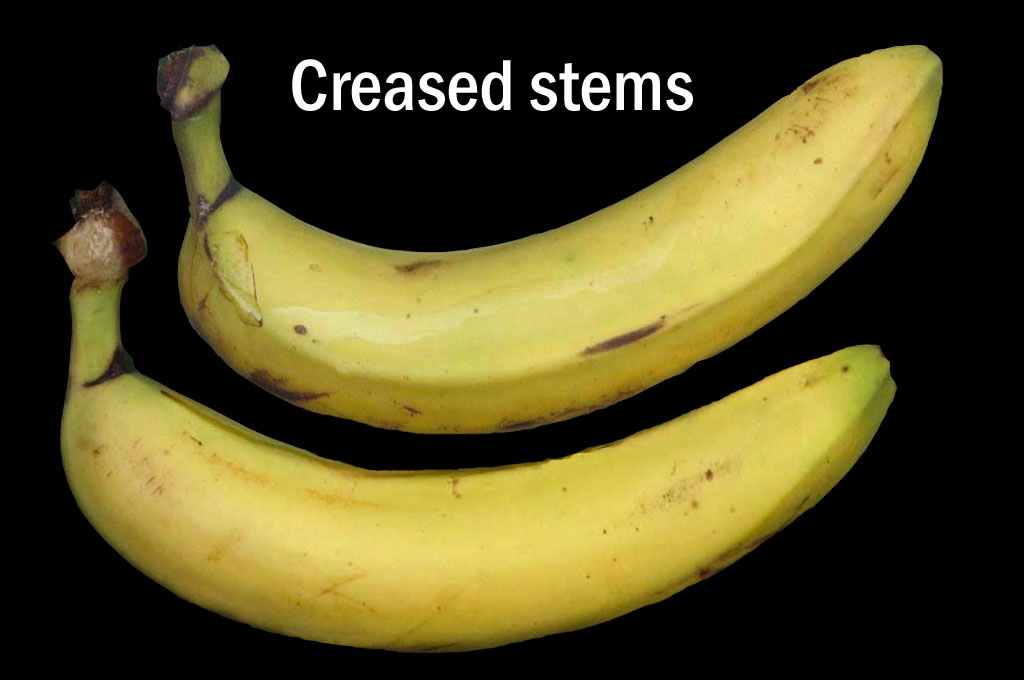
Skin abrasions. Abrasions result from skin scuffing against other fruits or surfaces of handling equipment or shipping boxes. When exposed to low (<90%) relative humidity conditions, water loss from scuffed areas is accelerated and their color turns brown to black.
Impact bruising. Dropping of bananas may induce browning of the flesh without damage to the skin.
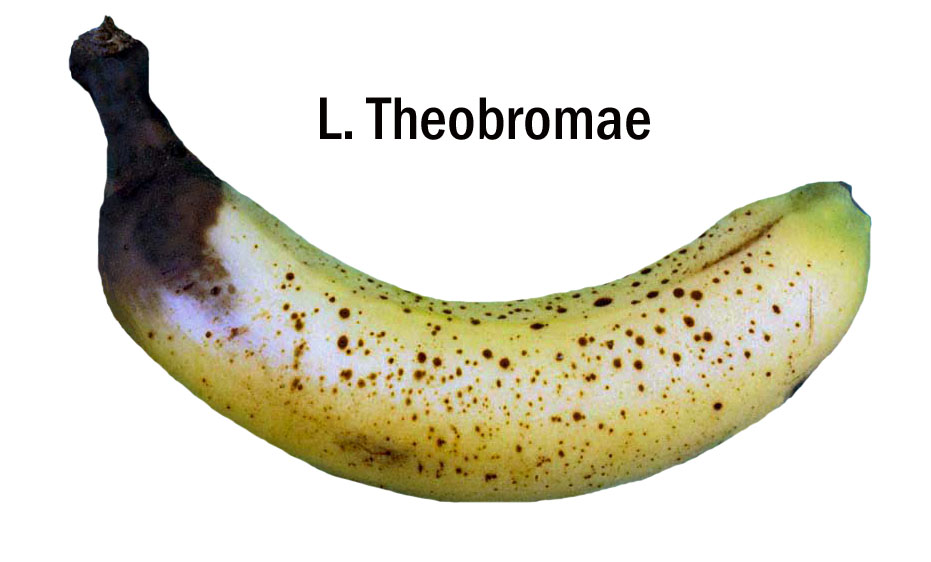
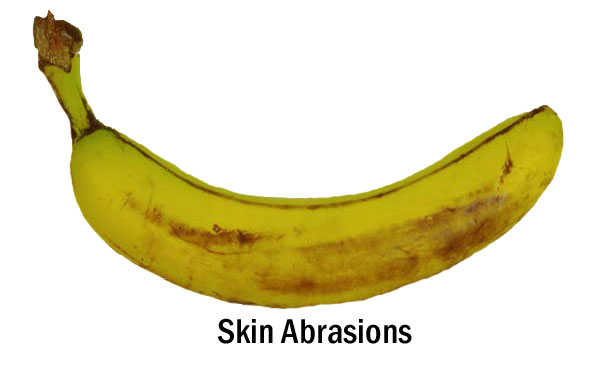
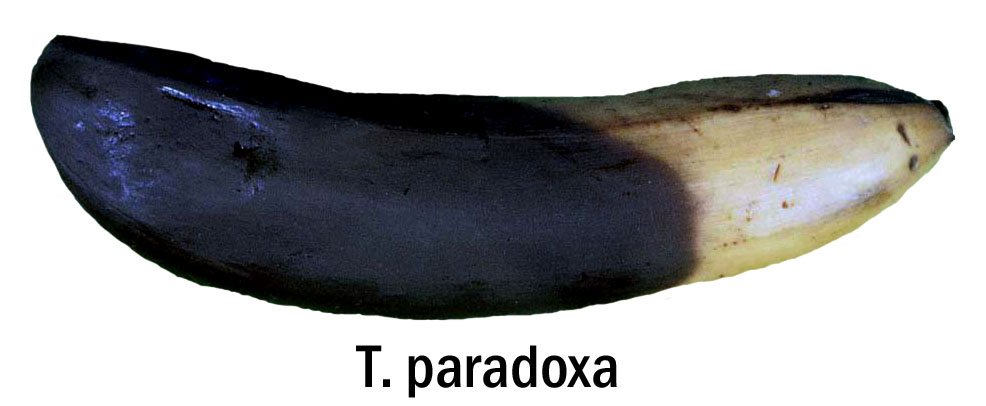
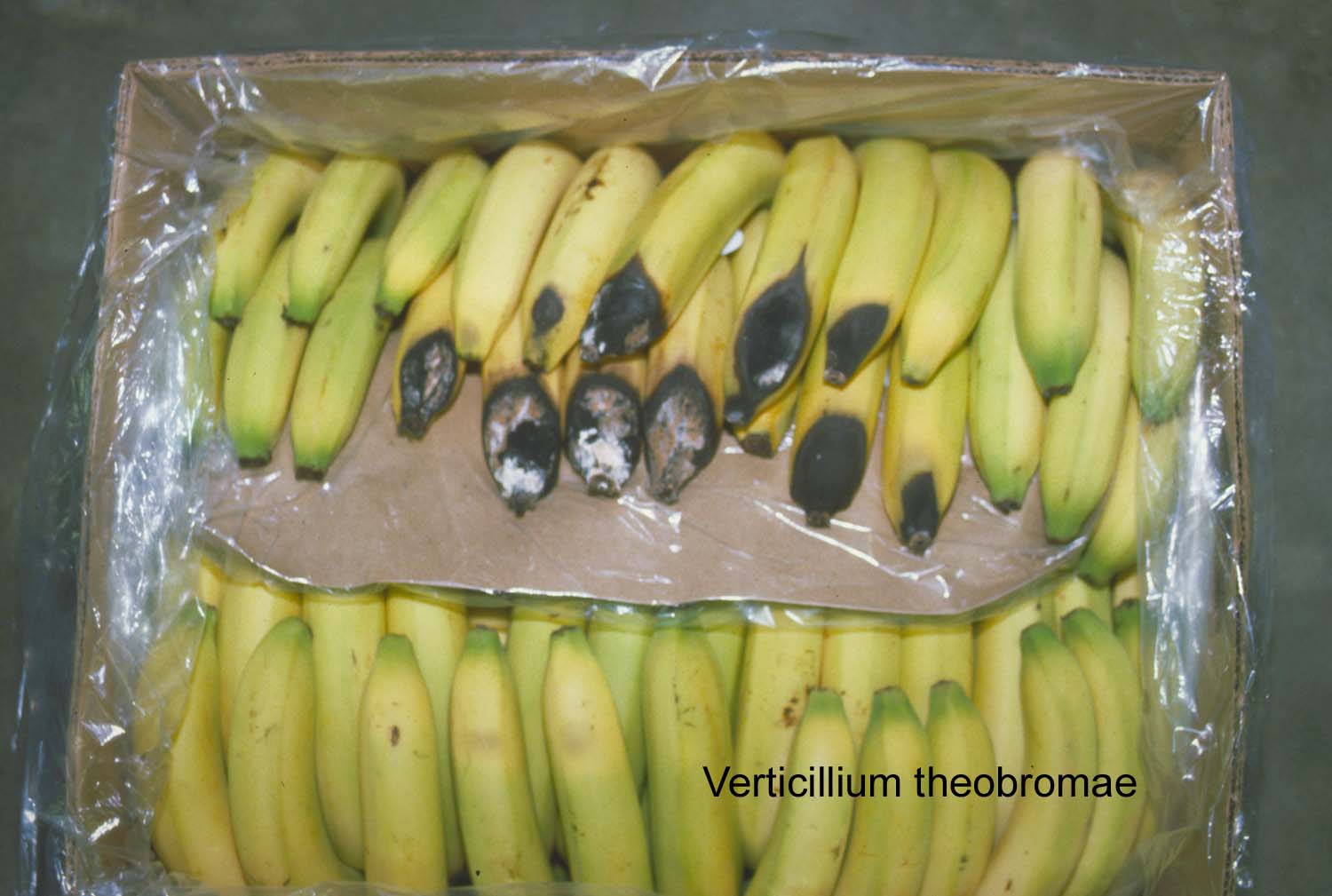
Pathological Disorders
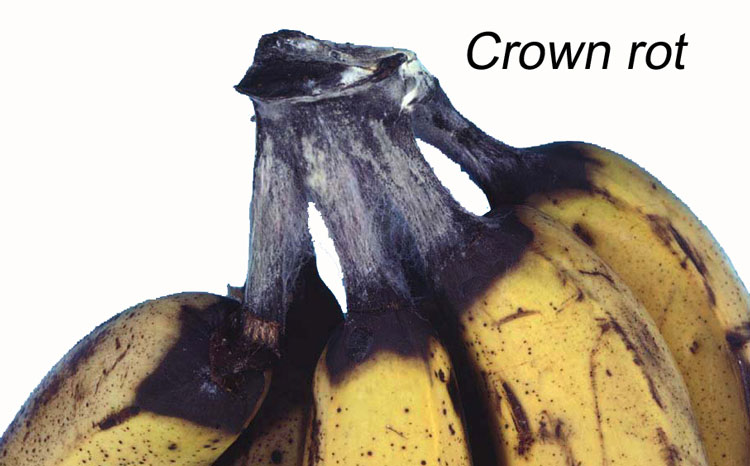
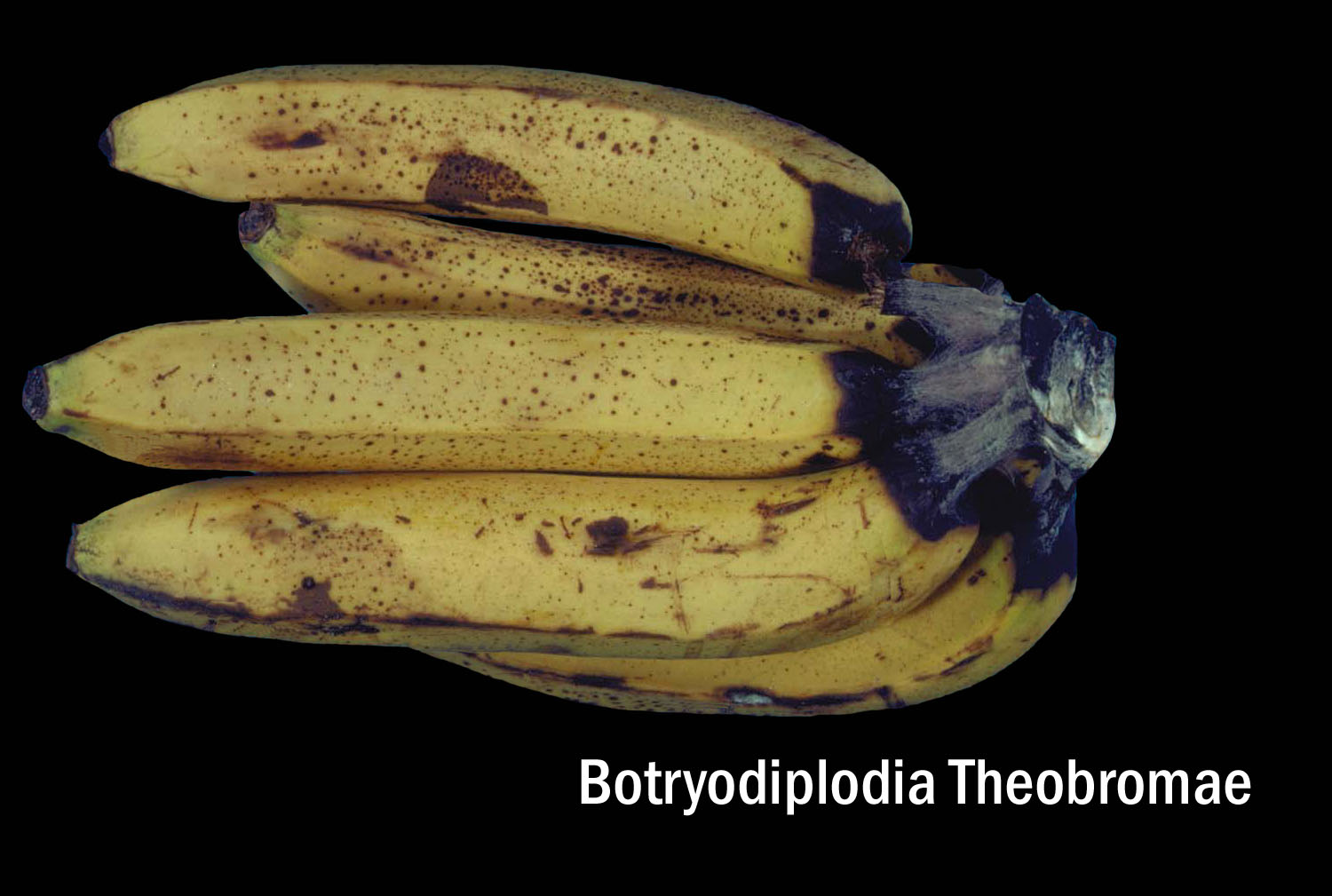
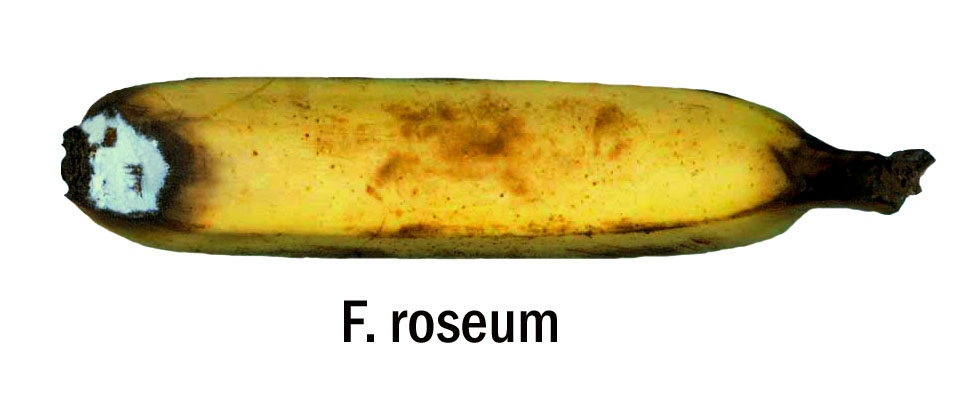
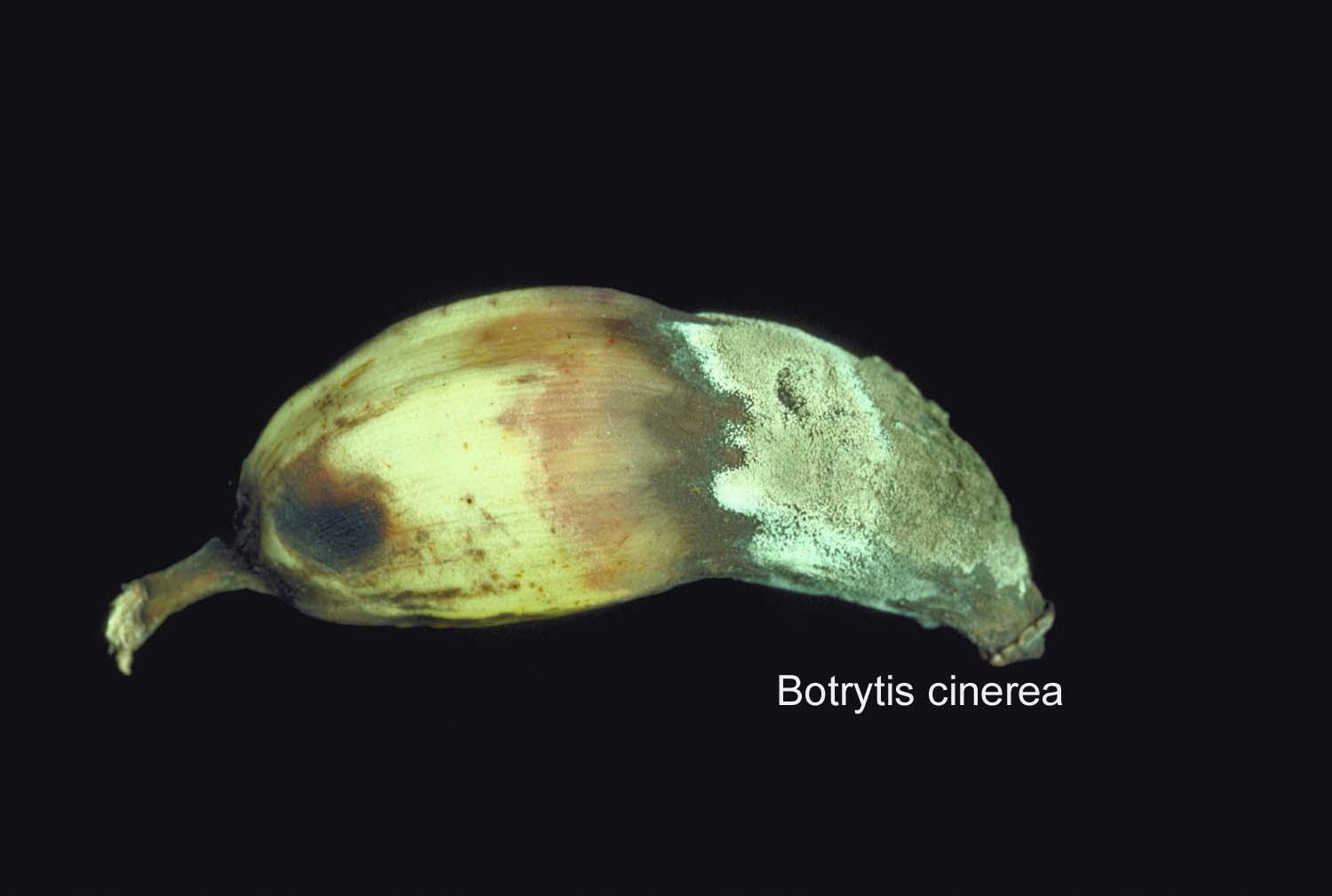
Crown rot. This disease is caused by one or more of the following fungi: Thielaviopsis paradoxa, Lasiodiplodia theobromae, Colletotrichum musae, Deightoniella torulosa, and Fusarium roseum--which attack the cut surface of the hands. From the rotting hand tissue the fungi grow into the finger neck and with time, down into the fruit.
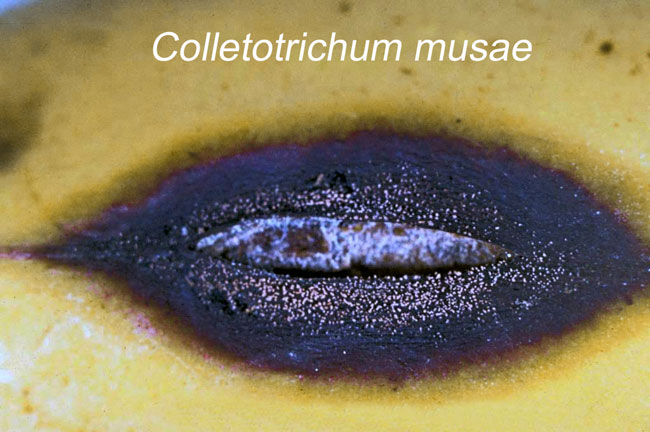
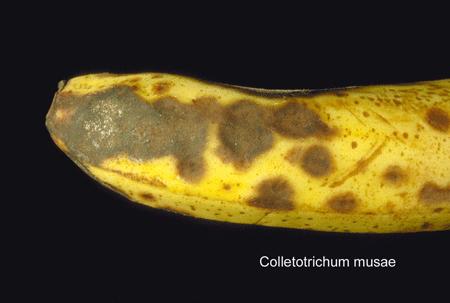
Anthracnose. Caused by Colletrichum musae, becomes evident as the bananas ripen, especially in wounds and skin splits.
Stem-end rot. Caused by Lasiodiplodia theobromae and/or Thielaviopsis paradoxa, which enter through the cut stem or hand. The invaded flesh becomes soft and water-soaked.
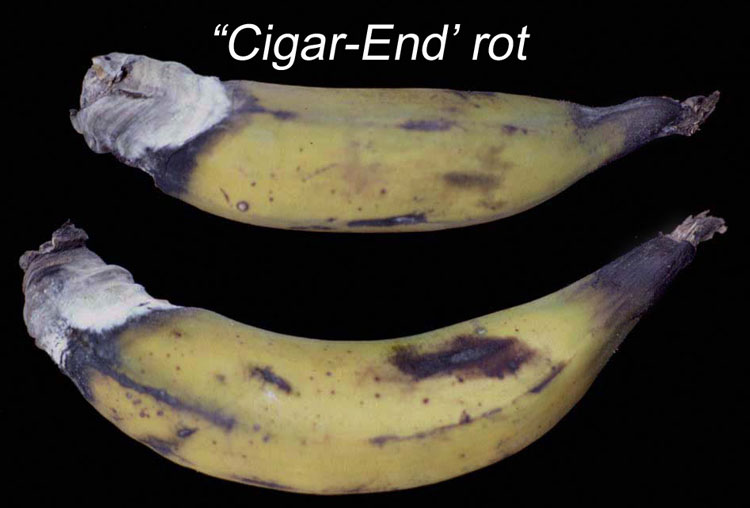
Cigar-end rot. Caused by Verticillium theobromae and/or Trachysphaera fructigena. The rotted portion of the banana finger is dry and tends to adhere to fruits (appears similar to the ash of a cigar).
Control Strategies
Minimizing bruising; prompt cooling to 14°C (58°F); proper sanitation of handling facilities; hot water treatments [such as 5 minutes in 50°C (120°F) water] and/or fungicide (such as Imazalil) treatment to control crown rot.
References
References from scientifically validated sources will be added in the future.