





Product description
Maturity and Quality
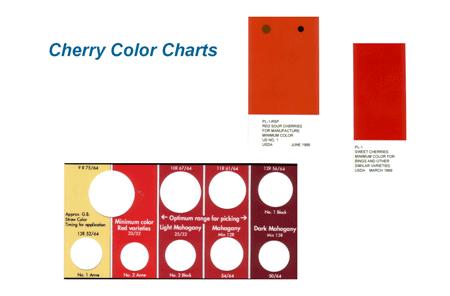
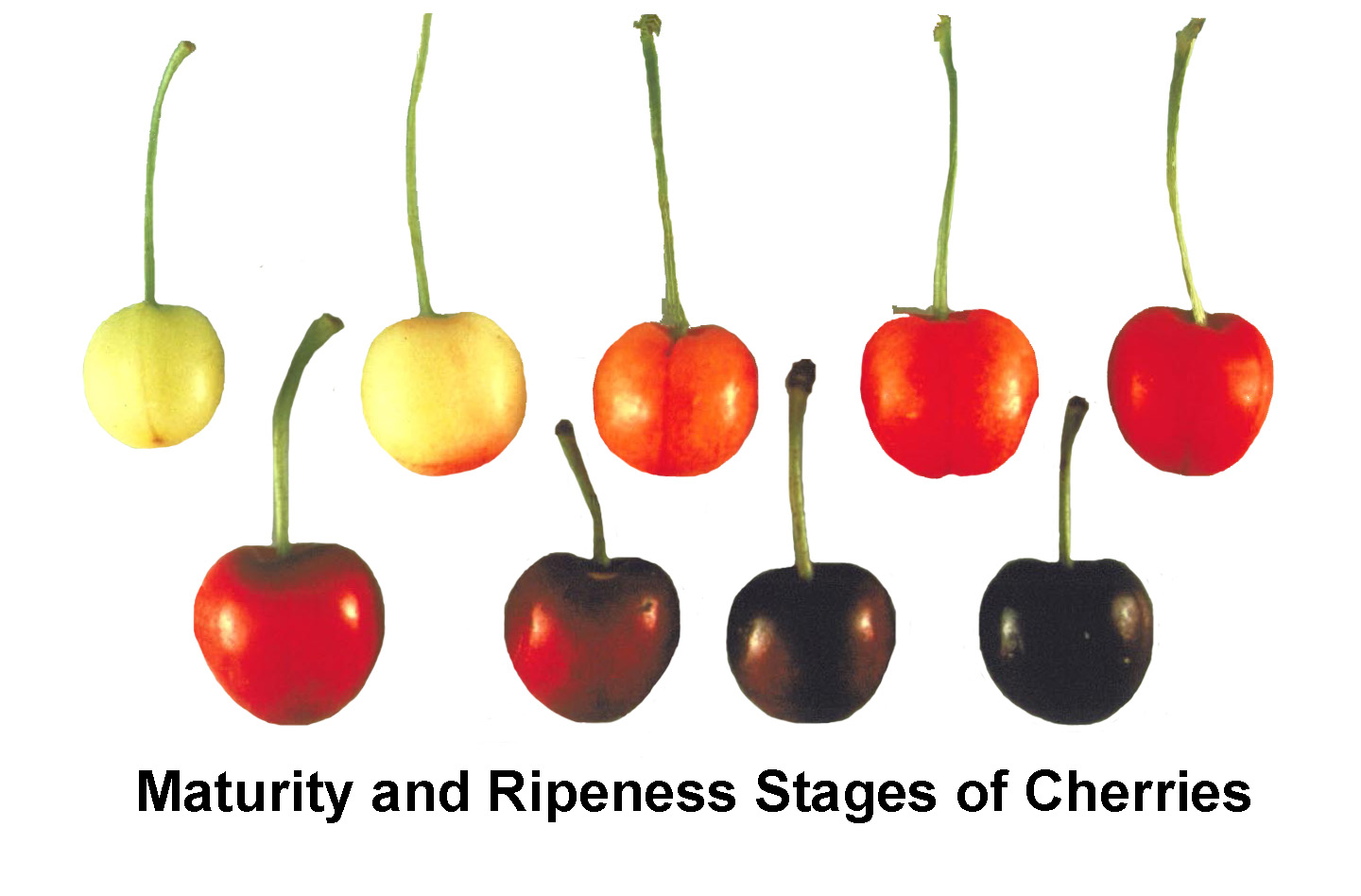
Skin color and soluble solids content (SSC) are the main criteria used to judge fruit maturity. Minimum maturity in California requires that the entire cherry surface have a minimum of light red color and/or 14 to 16% SSC, depending on the variety. The red mahogany stage is recommended for harvest of Brooks, Garnet, Ruby, Tulare and King varieties.
- Taste is related to SSC, titratable acidity (TA) and the ratio of SSC/TA
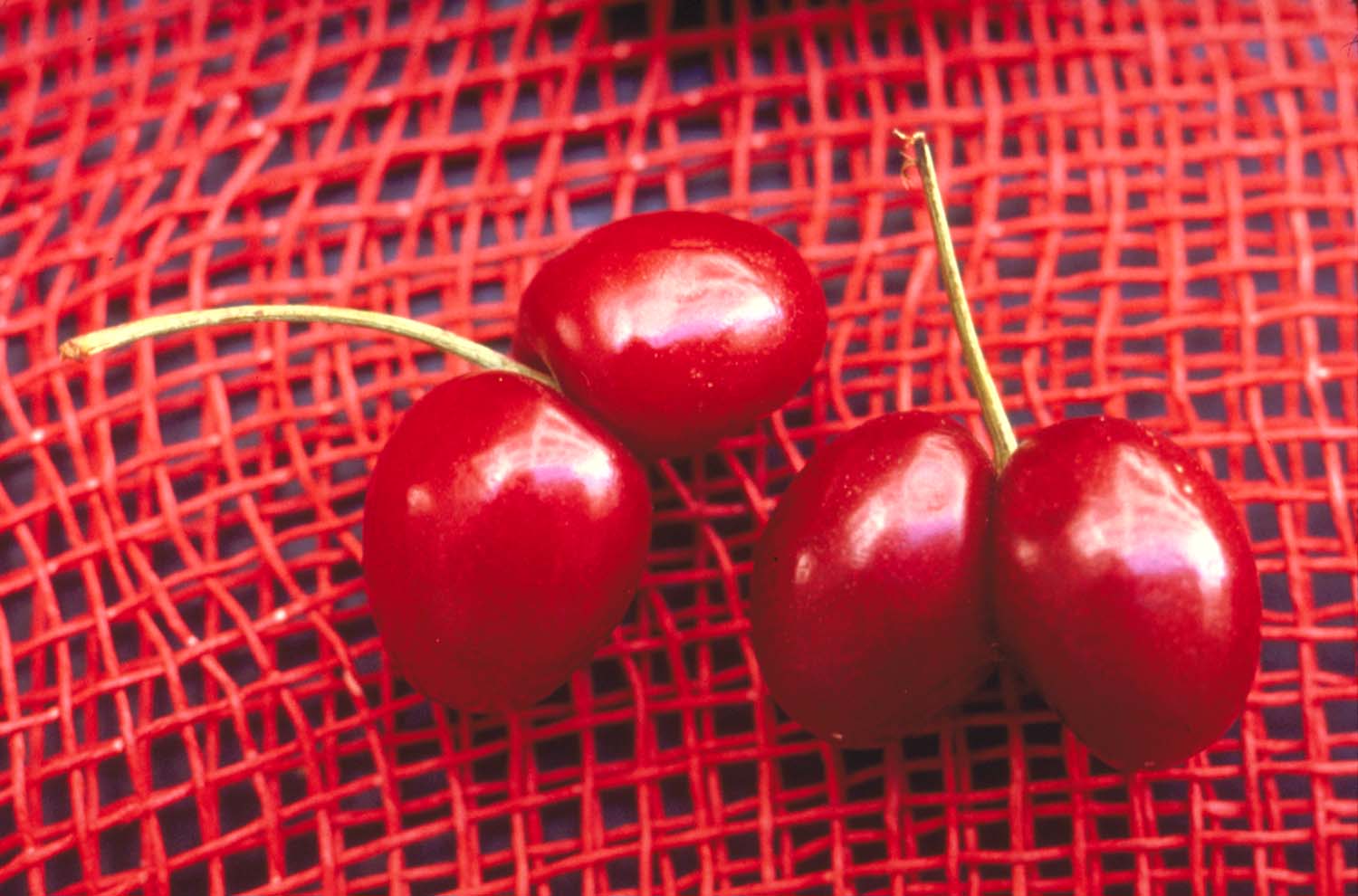
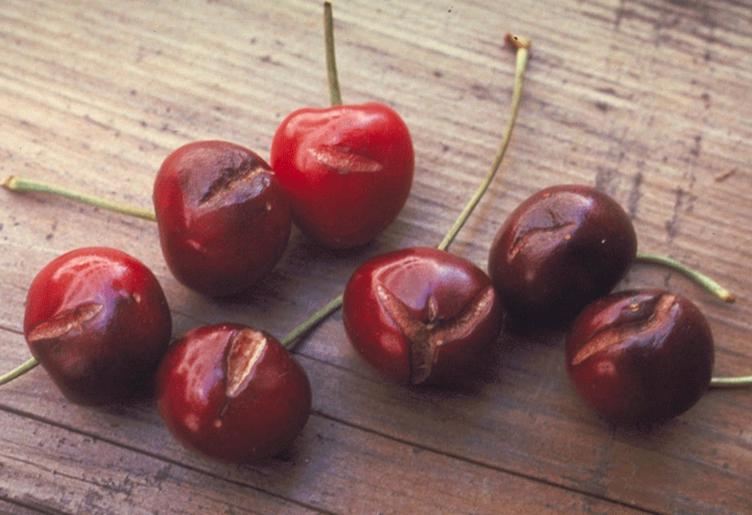
- Freedom from cracks, bird pecks, shriveling, decay or misshappen fruit (doubles, spurs)
- Green fleshy stems are often associated with freshness and quality
Postharvest Handling and Storage
-0.5 ± 0.5°C (31 ± 1°F)
90-95%
High humidity is particularly important to maintain green stem color.
| Temperature | 0°C (32°F) | 5°C (41°F) | 10°C (50°F) | 20°C (68°F) |
| ml CO2/kg·hr | 3-5 | 5-9 | 15-17 | 22-28 |
To calculate heat production multiply ml CO2/kg·hr by 440 to get Btu/ton/day or by 122 to get kcal/metric ton/day.
Cherry response to ethylene is minimal. Ethylene does not accelerate cherry ripening.
CA reduces respiration rate and thereby increases postharvest life. Elevated CO2 suppresses decay development. Modified atmosphere packaging within boxes has been very successful. Successful atmospheres are generally within the following ranges:
- 3 to 10% O2
- 10 to 15% CO2
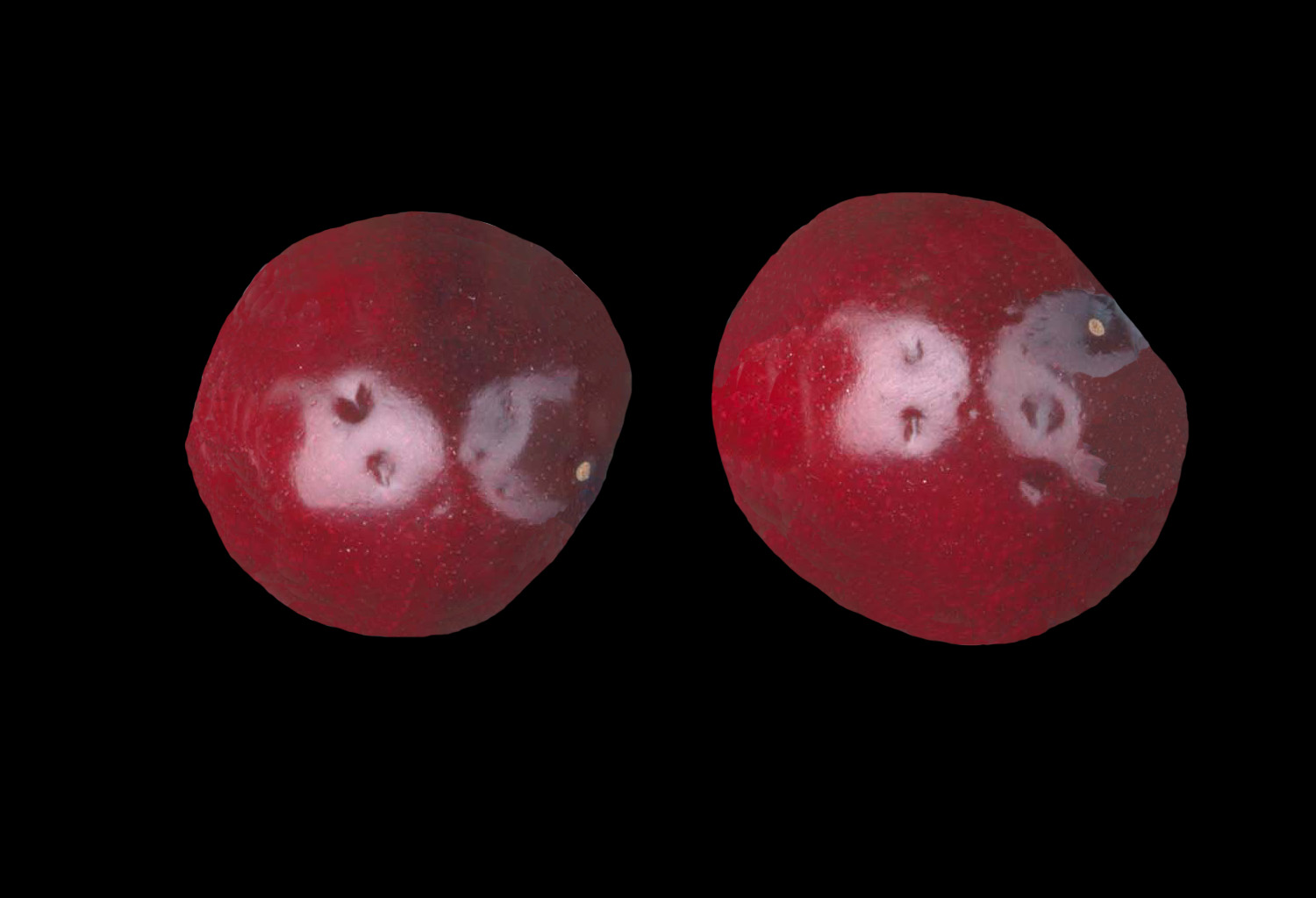
- <1% O2 can result in skin pitting and off-flavors
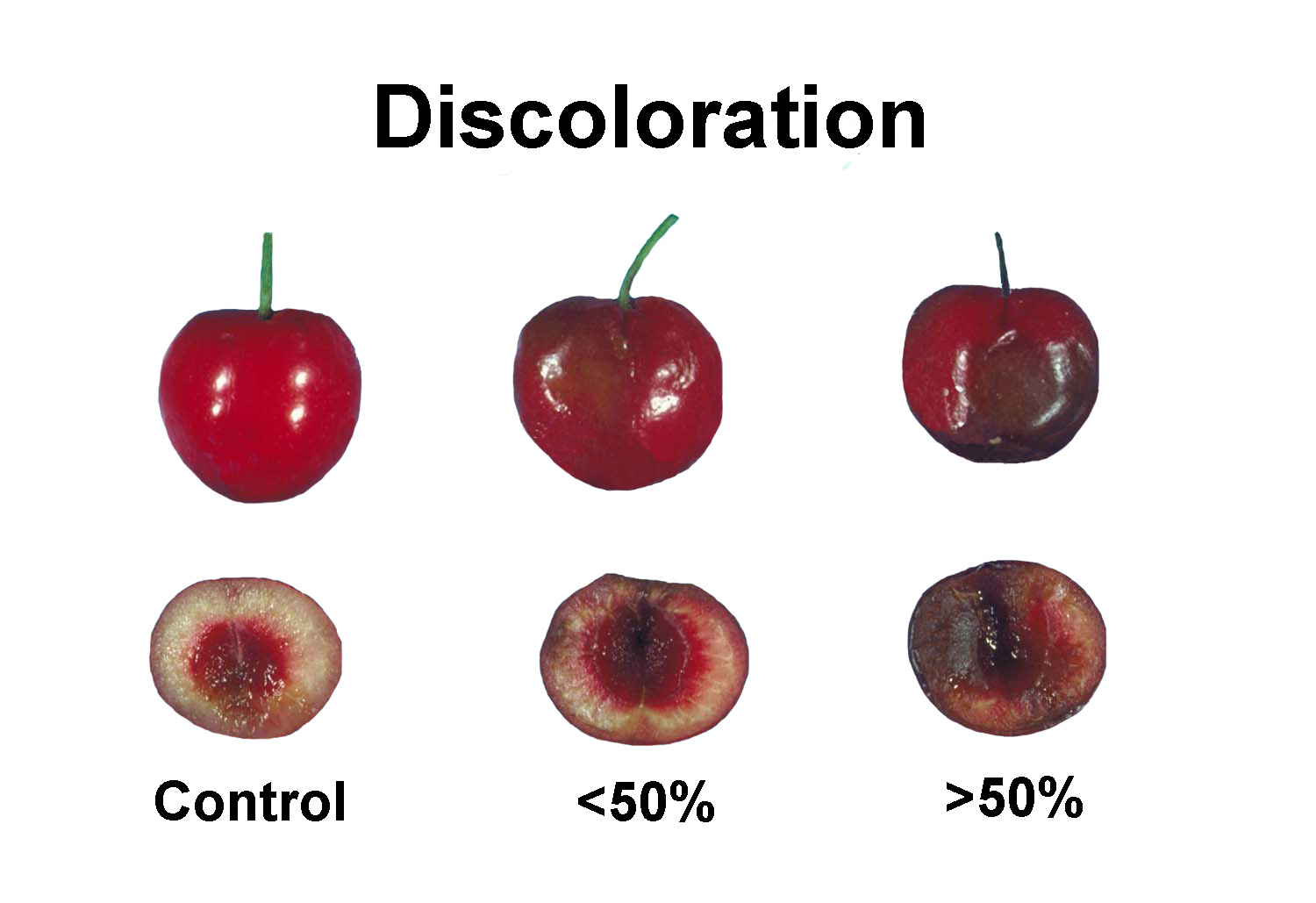
- >30% CO2 can result in brown skin discoloration and off-flavors
Flavor volatiles may be reduced following several weeks of CA storage resulting in fruit of good visual quality but poor sensory quality.
Temperature & Controlled Atmosphere Photos
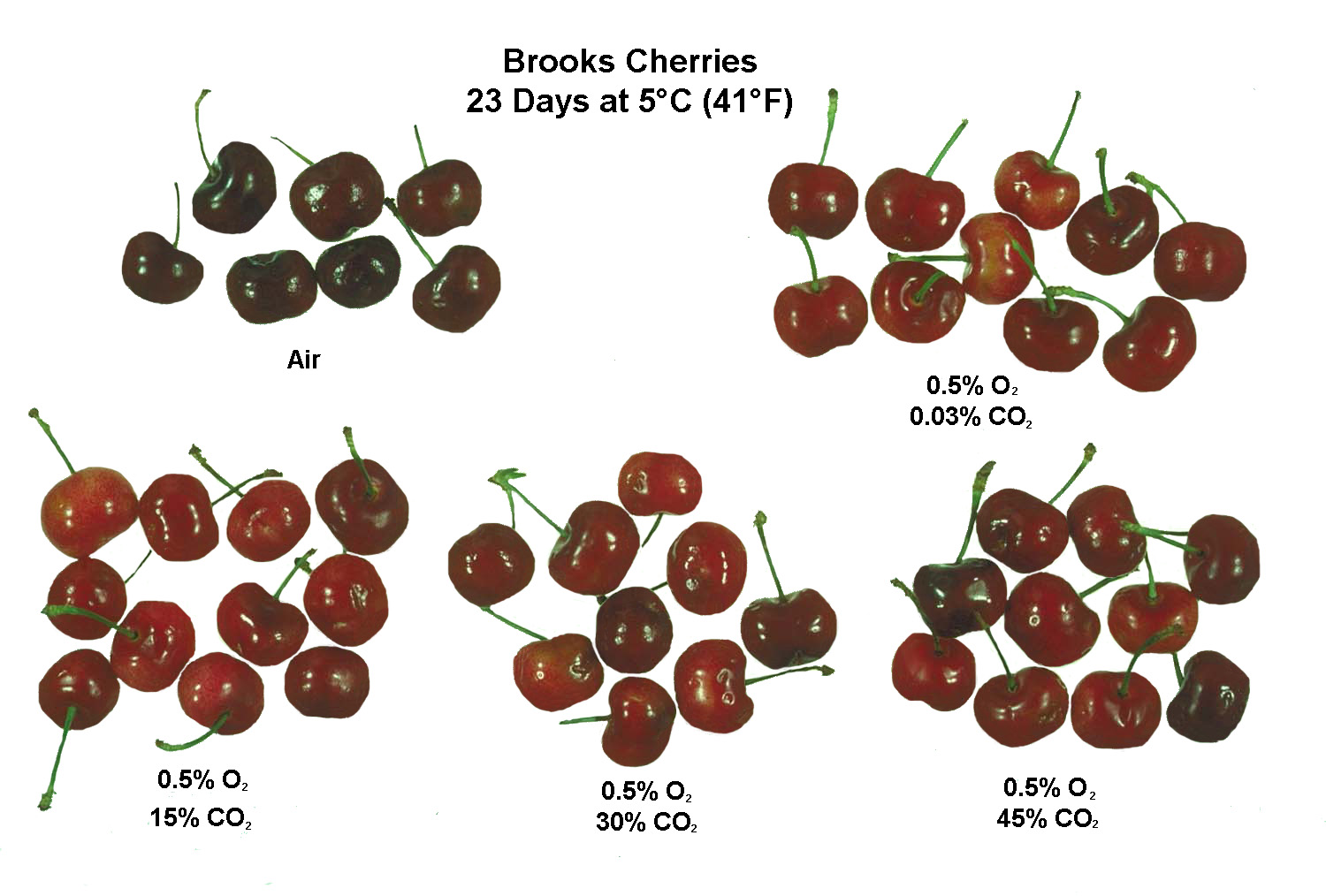
Title: Effects of CA on cherry. Credits: Edwards, Don: University of California, Davis
Physiological and Physical Disorders
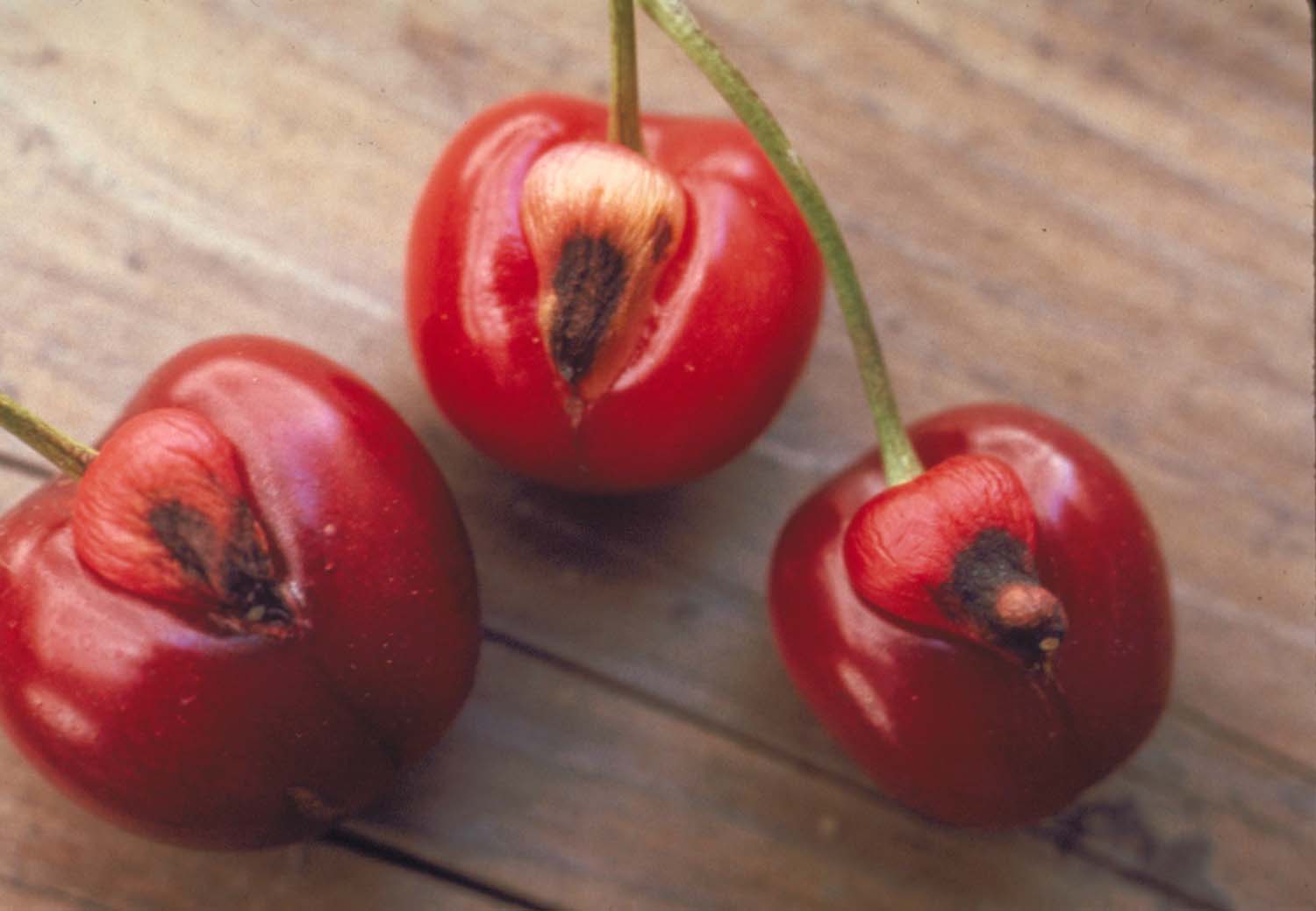
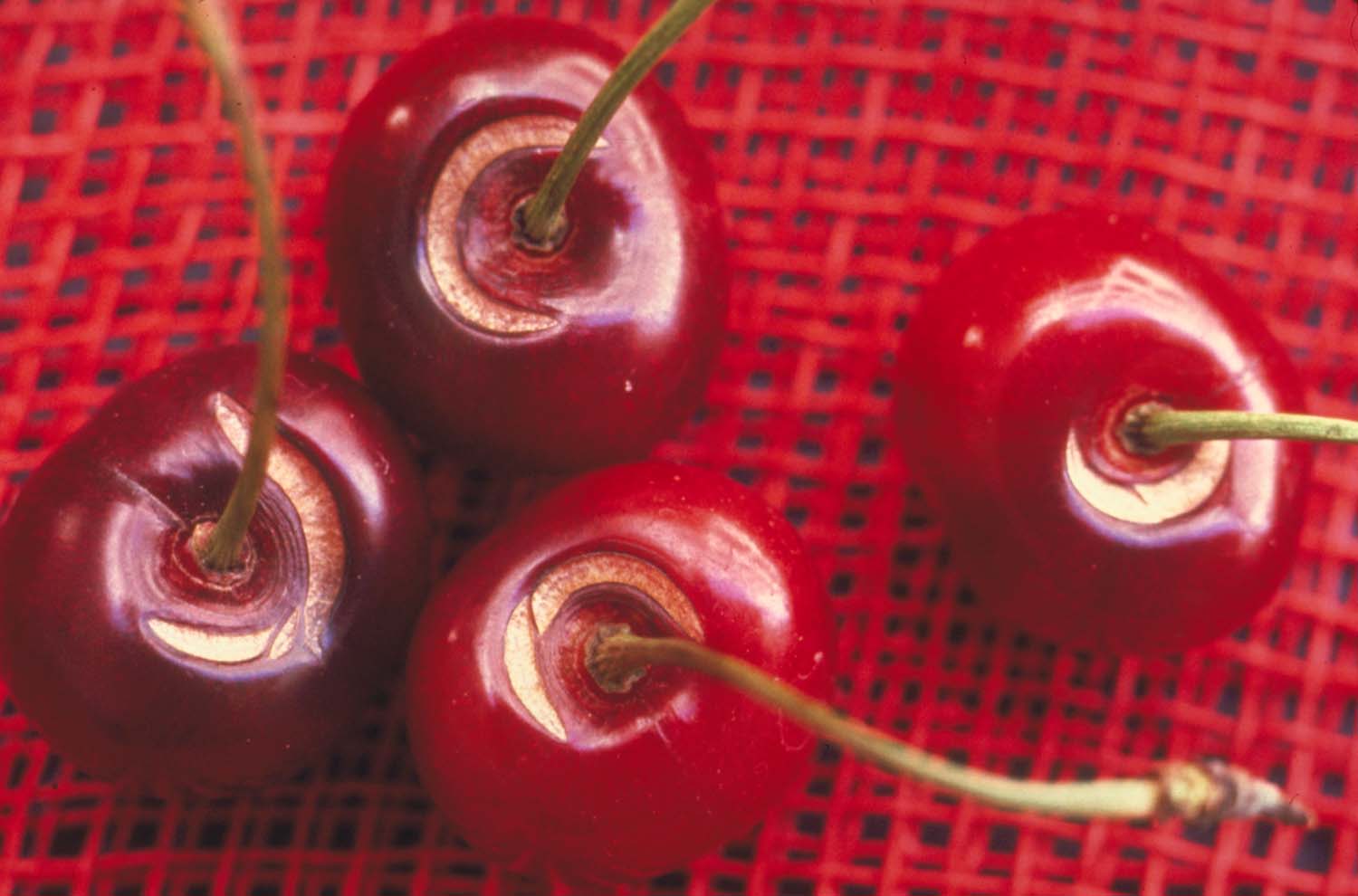
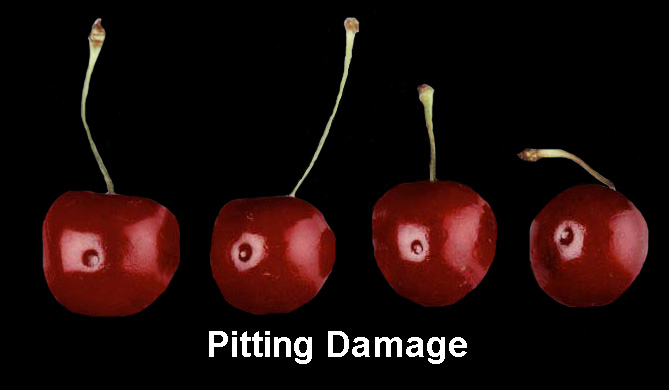
Pitting. An indentation in the surface of the fruit caused by the collapse of cells under the skin. Thought to result from impact injury.
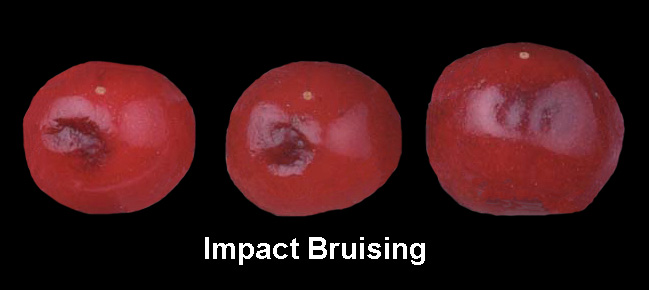
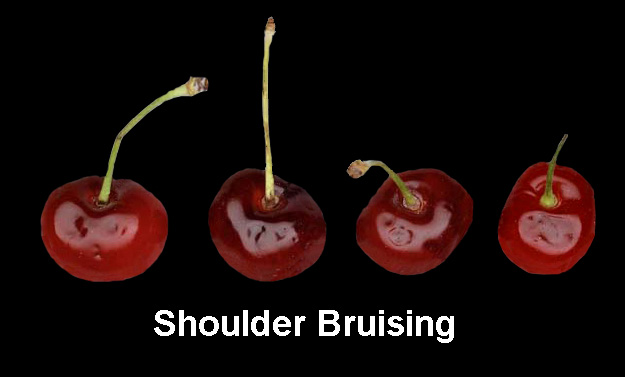
Bruising. Results from compression and impact of the fruit.
Postharvest life is closely related to respiration rate. Respiration rate increases as a result of increased temperature and physical injury.
Pathological Disorders
Brown Rot. Caused by Monilinia fruticola, disease can begin in the orchard or postharvest. Pre and postharvest control measures are necessary.
Grey Mold. Caused by Botrytis cinerea, a fungus that continues to grow slowly at 0°C (32°F).
Rhizopus Rot. Caused by Rhizopus stolonifer, a fungus that is found in fruit exposed to temperatures of 5°C (41°F) or greater. Proper temperature management (rapid cooling to optimum storage temperature) can completely control Rhizopus Rot.
Brown Rot and Grey Mold. Proper temperature management (rapid cooling to optimum storage temperature) can significantly reduce Brown Rot and Grey Mold
Eliminating injured and diseased fruit from the packed box is important. Fungicide treatments, pre and postharvest are often beneficial.
References
References from scientifically validated sources will be added in the future.