




Product description
Maturity and Quality
Color (more than 2/3 of fruit surface showing yellow color) and a minimum soluble solids/acid ratio of 5,5 or 6 (depending on production area). Grapefruit do not continue to ripen after harvest so they should be harvested fully-ripe (with good flavor).
- Color intensity and uniformity
- Firmness
- Size
- Shape
- Peel thickness; smoothness
- Freedom from decay and defects, such as freezing injury, rind staining, pitting, scars, and insect damage
- Flavor is related to soluble solids/acid ratio and concentration of compounds that impart bitter flavor (limonin and naringin)
Postharvest Handling and Storage
12-14°C (54-57°F) depending on cultivar, production area, maturity-ripeness stage at harvest, and storage and transport duration (up to 6-8 weeks).
90-95%
| Temperature | 10°C (50°F) | 13°C (55°F) | 15°C (59°F) | 20°C (68°F) |
| ml CO2/kg·hr | 3-5 | 4-7 | 5-9 | 7-12 |
To calculate heat production multiply ml CO2/kg·hr by 440 to get Btu/ton/day or by 122 to get kcal/metric ton/day.
Less than 0.1 µl/kg·hr at 20°C (68°F)
Exposure of mature-green grapefruits for 1-3 days to ethylene (1-10ppm) at 20-30°C (68 to 86°F) accelerates loss of green color and appearance of yellow color (degreening). This is accompanied by faster peel senescence and greater susceptibility to decay-causing pathogens.
- Low O2 (3-10%) and high CO2 (5-10%) concentrations delay senesence and maintain firmness of grapefruits kept at 13-15°C (55-59°F)
- Exposure to O2 levels below 3% and/or CO2 levels above 10% may result in off-flavors due to accumulation of acetaldehyde, ethanol, and ethyl acetate. This precludes the use of fungistatic levels of CO2 (>10%) for longer than a few days
- Commercial use of CA during transport and/or storage of grapefruits is very limited
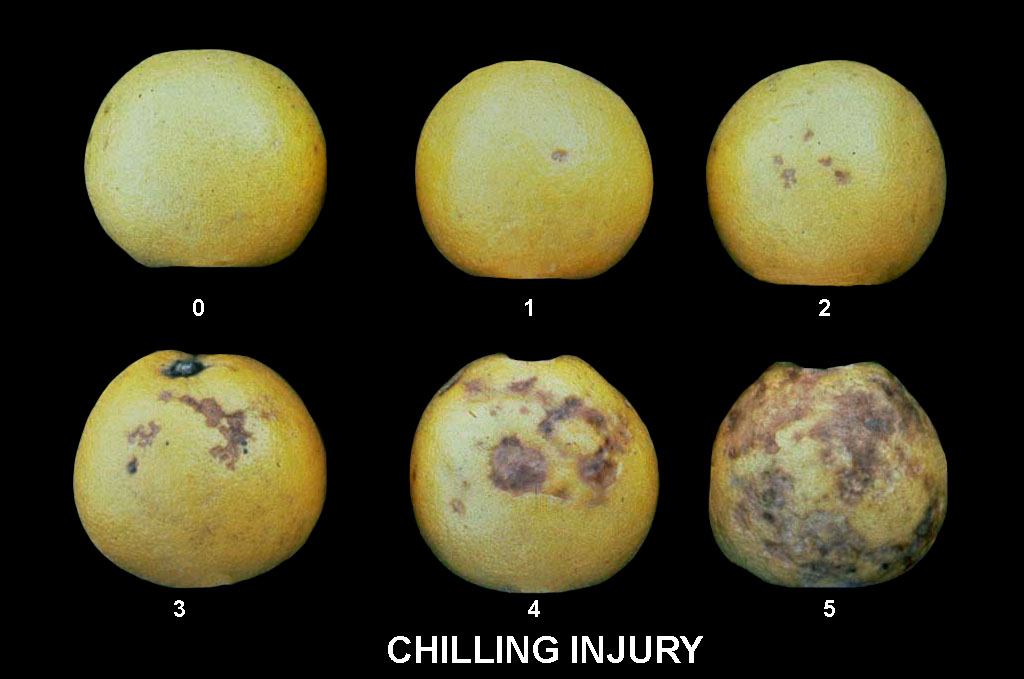
Temperature & Controlled Atmosphere Photos
Title: Chilling Injury (1) |
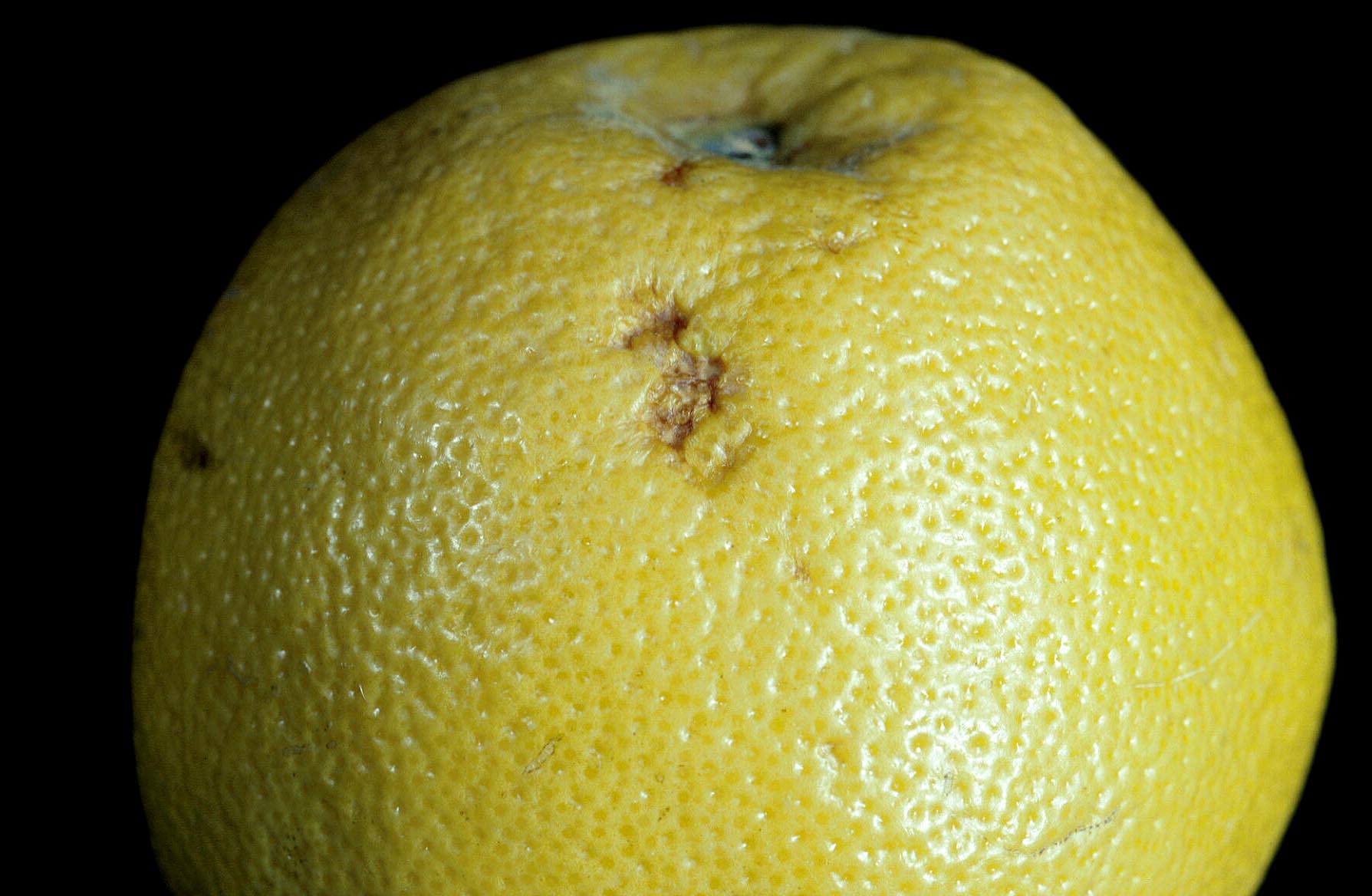
Title: Chilling Injury (2) |
Physiological and Physical Disorders
Chilling injury. Severity of chilling injury depends upon cultivar, maturity and ripeness stage at harvest, production area and season (preharvest cultural practices and weather conditions). Symptoms including pitting, reddish brown discoloration, scald, watery breakdown, off-flavors, and increased decay incidence. Waxing or film wrapping to minimize water loss and use of fungicides (especially thiabendazole) to control decay can reduce severity of chilling injury symptoms. Conditioning at 15-18°C (59-65°F) in air or in air + 10-20% CO2 for 5-7 days can reduce severity of chilling injury symptoms on grapefruits that are subsequently exposed to chilling temperatures, such as those required for quarantine treatments against tropical fruit flies.
Oil spotting (Oleocellosis). Physical stress on turgid fruits may result in breaking of oil cells and release of oil that damages surrounding tissues.
Pathological Disorders
Important Diseases:
- Green mold (Penicillium digitatum)
- Blue mold (Penicillium italicum)
- Phomopsis stem-end rot (Phomopsis citri)
- Stem end rot (Lasiodiplodia theobromae)
- Brown rot (Phytophthora citrophthora)
- Sour rot (Geotrichum candidum)
Control Strategies
- Careful handling to minimize physical damage
- Good sanitation in the orchards and packing houses
- Treatment with hot water dip (50-53°C [120-125°F] for 2-3 minutes) or drench (55°C [129°F] for 20-30 seconds)
- Treatment with postharvest fungicides and/or biological antagonists
- Prompt cooling and expedited handling
- Removal and/or exclusion of ethylene
References
References from scientifically validated sources will be added in the future.