





Product description
Maturity and Quality
Many culinary herbs are harvested as soft or semi-woody leafy stems (dill, oregano, tarragon, basil, mint), and the herb can also include immature or mature flowers. Some herbs are harvested as developing leaves (mache) or intact plants (cilantro, parsley).
Quality characteristics are largely visual and include appearance of freshness, uniformity of size, form and color, and lack of defects (damaged or yellowed leaves, decay, insect damage, wilting). Characteristic aroma is essential for culinary herb quality, and generally essential oils and aroma decrease during storage.


Postharvest Handling and Storage
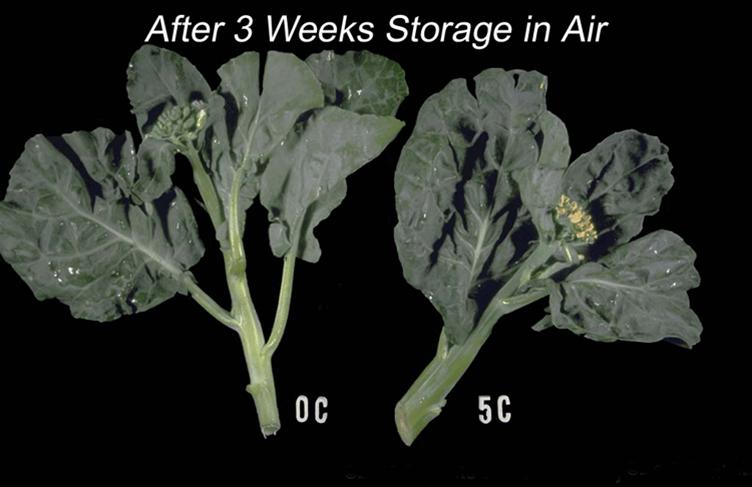
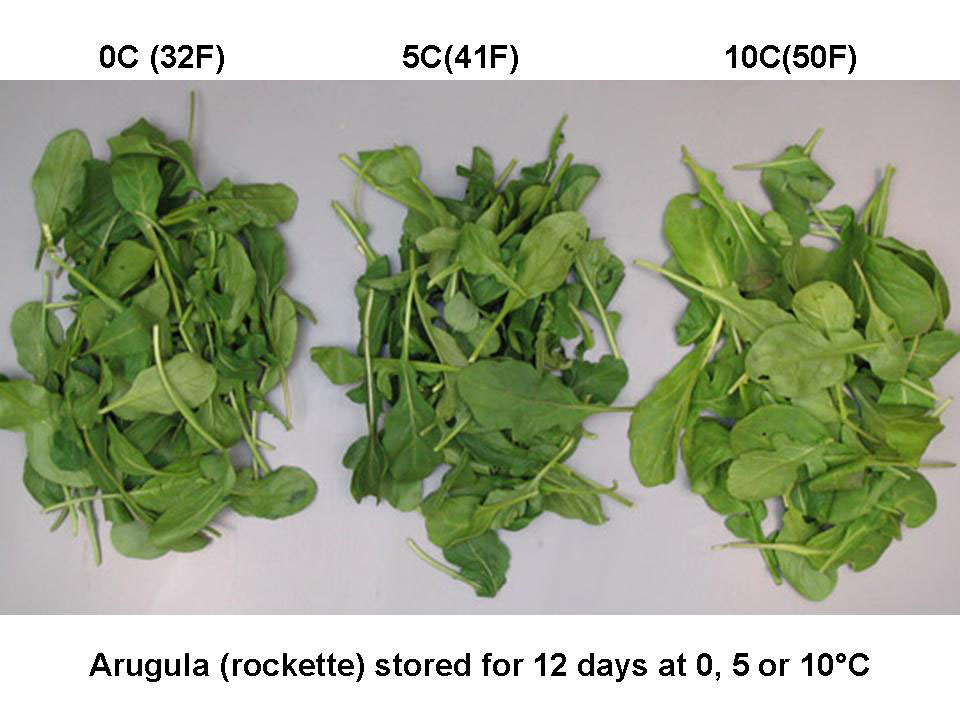
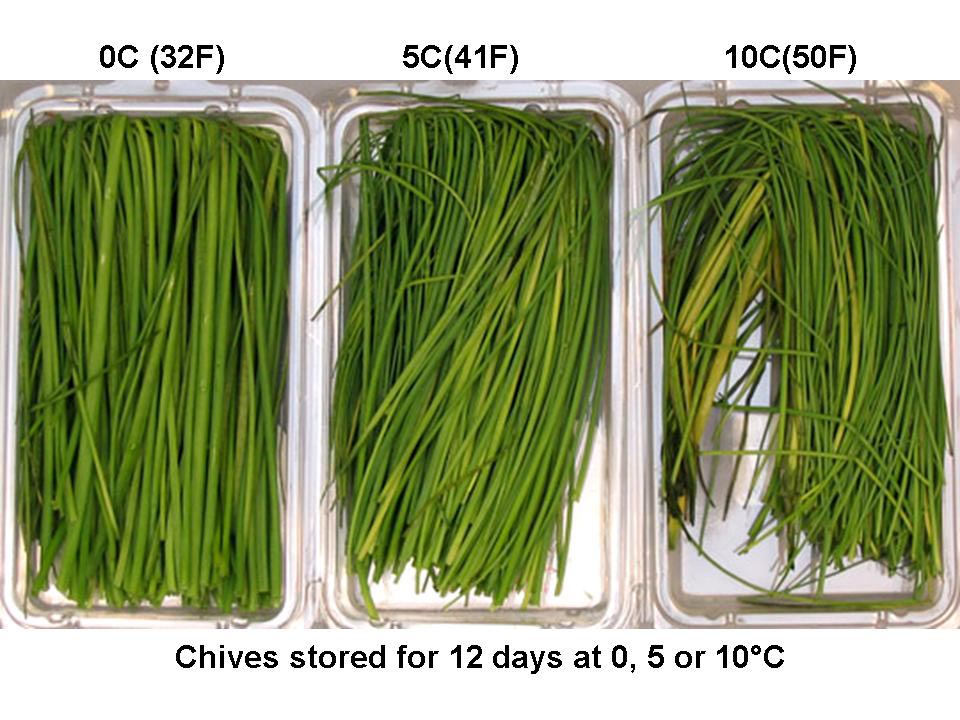
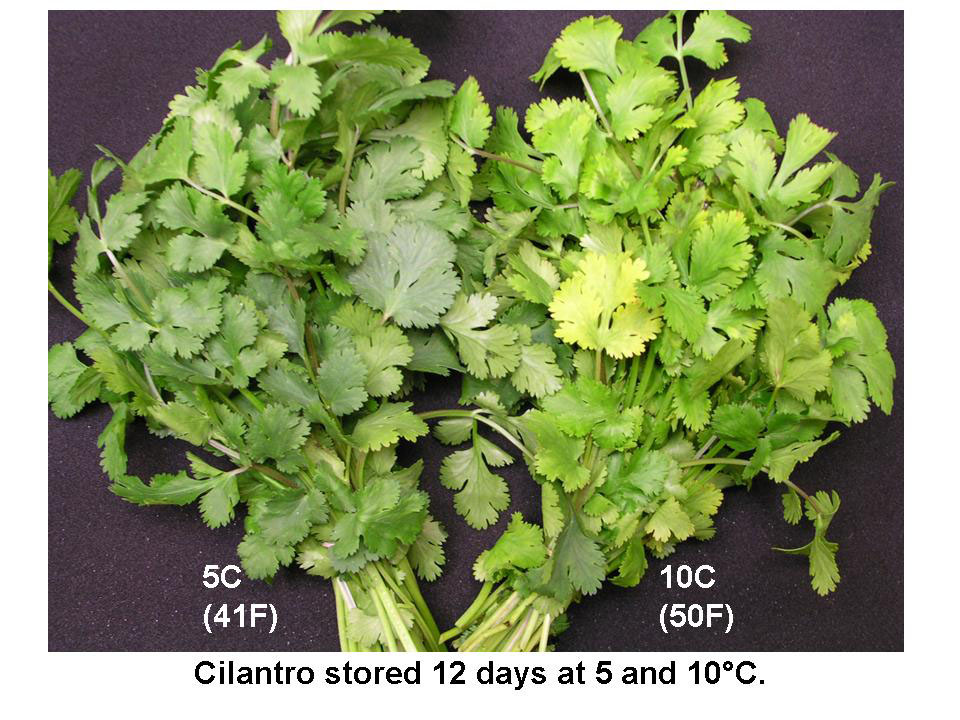
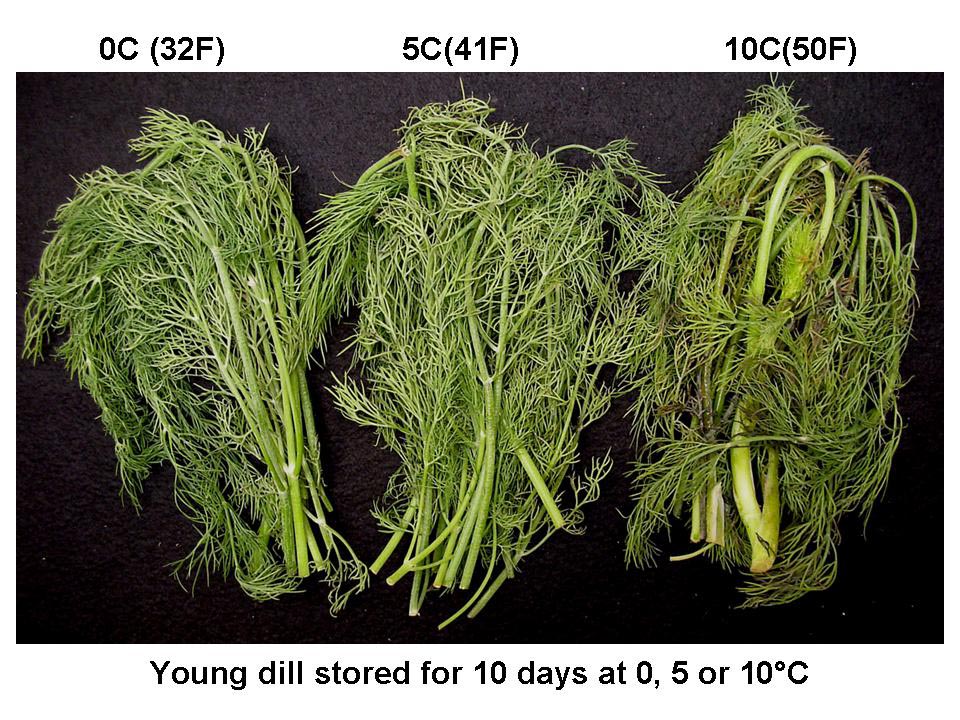
For most herbs, storage at 0°C (32°F) is required to optimize quality and storage life. Expected shelf-life is 3 weeks at 0°C (32°F) and 2 weeks at 5°C (41°F). See table for specific data on different fresh herbs. Basil and shiso are chilling sensitive and should be stored above 10°C (50°F). Depending on water loss, a shelf-life of 1 to 2 weeks can be expected for basil and shiso. Herbs may be cooled by hydrocooling before packaging or room cooling after packaging. Some herbs such as cilantro and parsley are iced, and some herbs may be vacuum cooled. Because of the small quantities marketed, water loss can be a serious cause of quality loss, especially in the large-leaved herbs such as basil and cilantro.
Effect of temperature with high humidity on the visual quality of fresh culinary herbs stored for 10 days. Visual quality was scored on a 9 to 1 scale, where 9 = excellent, 7 = good, 5 = fair, 3 = poor, 1 = unuseable. A "+" indicates sensitivity to ethylene when stored at 10°C (50°F).
>95%
The respiration rates of fresh culinary herbs vary considerably, but values during the first five days from harvest are:
| Temperature | 0°C (32°F) | 10°C (50°F) | 20°C (68°F) |
| ml CO2/kg·hr | 6-20 (average for herbs listed = 13) | 25-80 (average for herbs listed = 47) | 52-300 (average for herbs listed = 118) |
To calculate heat production, multiply ml CO2/kg·hr by 440 to get BTU/ton/day or by 122 to get kcal/metric ton-day.
Ethylene production rates vary among the fresh culinary herbs and are generally higher than rates for leafy green vegetable:
| Temperature | 0°C (32°F) | 10°C (50°F) | 20°C (68°F) |
| µL/kg·hr | 0.06-0.22 (average for herbs listed = 0.11) | 0.10-0.57 (average for herbs listed = 0.43) | 0.36-3.00 (average for herbs listed = 1.25) |
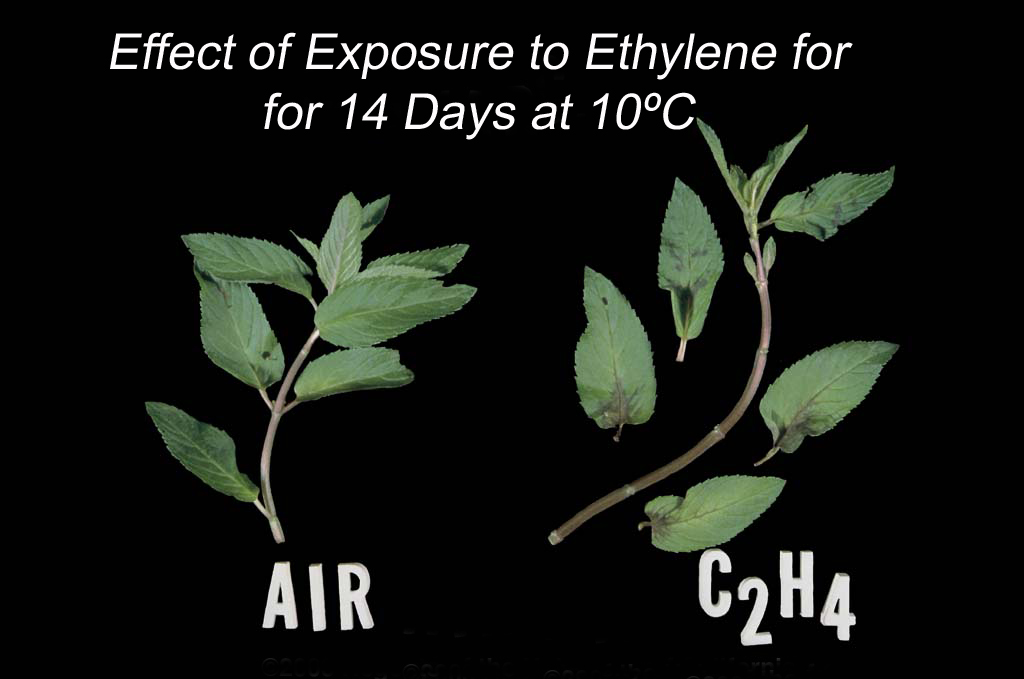
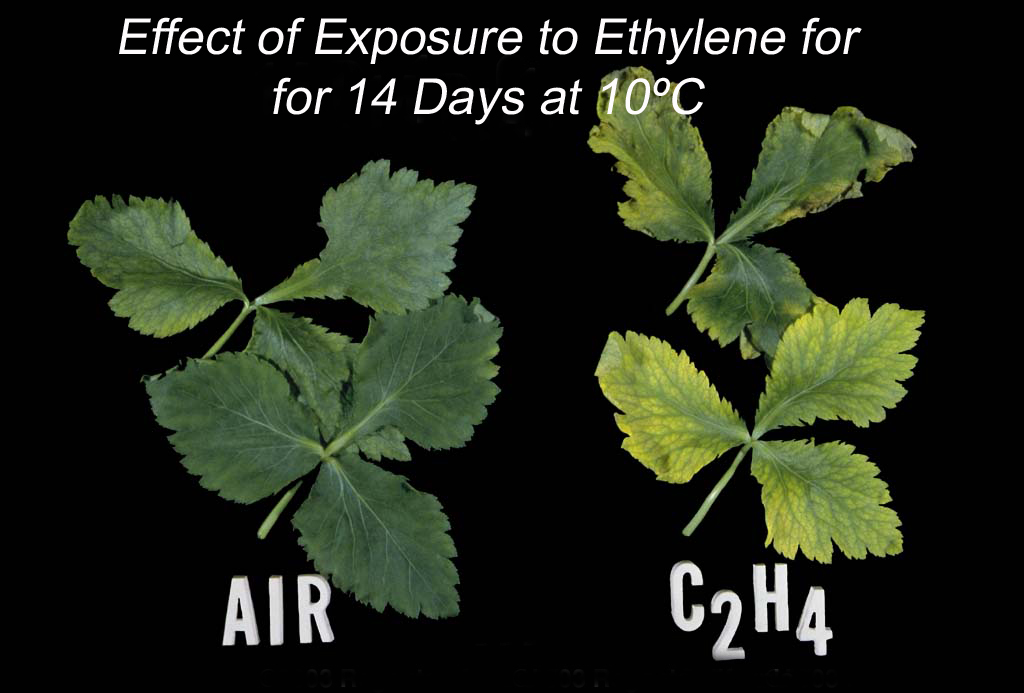
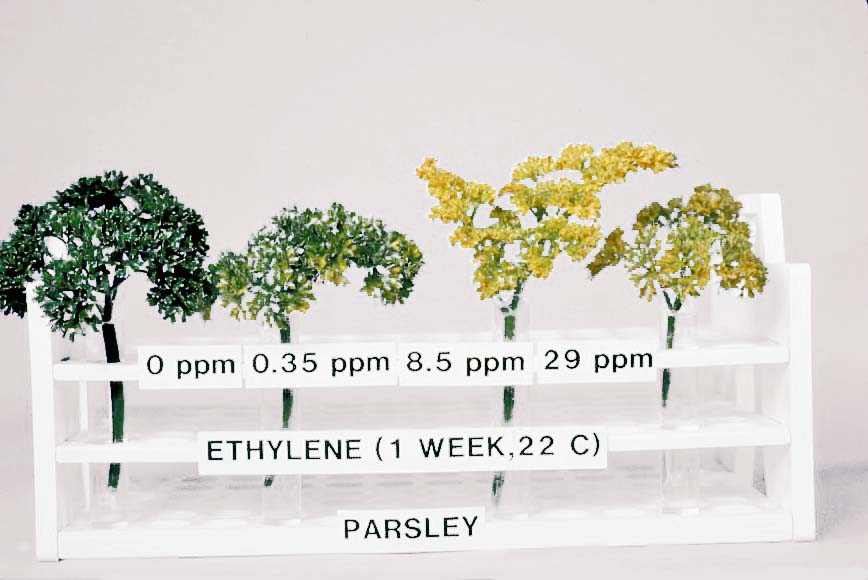
The main symptoms of ethylene exposure are yellowing, epinasty (stem curvature) and leaf abscission. Some herbs (marjoram, mint, parsley, organo) are very sensitive to ethylene exposure, while others (sage, thyme, basil, rosemary) are minimally affected or do not respond at all. As with other products, storage at low temperature reduces the detrimental effects of ethylene, (see table in Optimum Temperature and Relative Humidity.
Some benefit to shelf-life can be obtained with low O2 (1-5%) and high CO2 (5-15%) atmospheres at moderate temperatures 5-10°C (41-50°F). Low O2 atmospheres will reduce respiration rates and reduce the detrimental effects of ethylene. High CO2 atmospheres maintain green color and reduce decay in many herbs (such as parsley and cilantro), but are not beneficial for basil.
Because of the importance of the essential oils and aroma to fresh culinary herb quality, it is important to emphasize that visual shelf-life is much longer than useful culinary shelf-life. For example, in cilantro, aroma notably declines after 10 days, although cilantro can be marketable for 21 days under some storage conditions. In basil, storage at chilling temperatures greatly reduces aroma quality.
Temperature & Controlled Atmosphere Photos
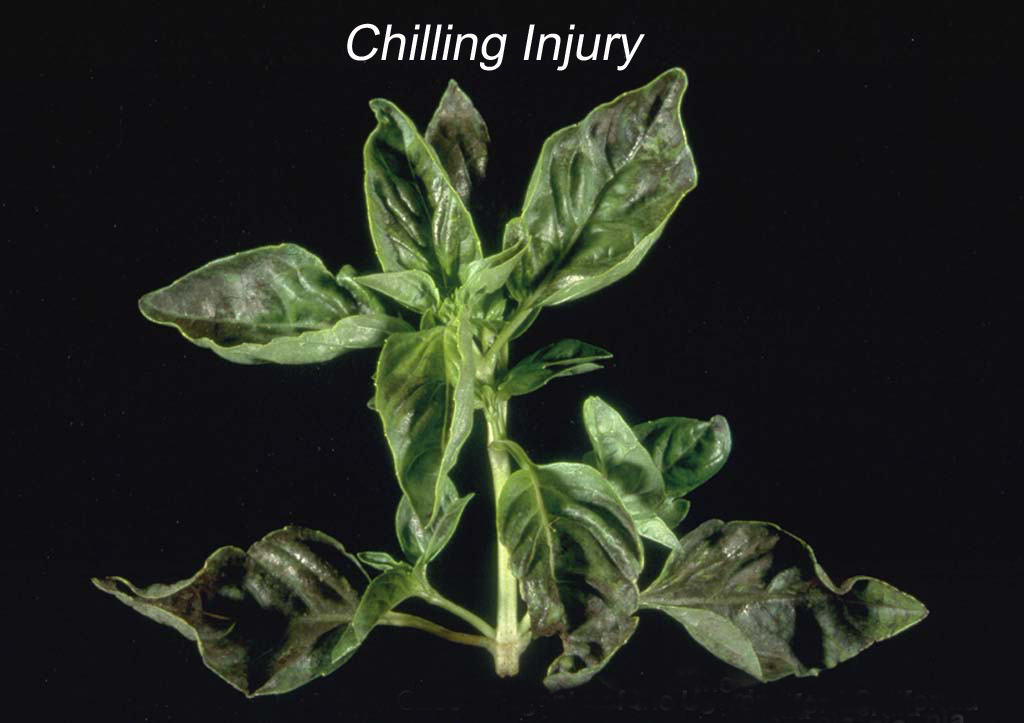
Title: Chilling Effects on Basil. Photo Credit: Marita Cantwell, UC Davis |
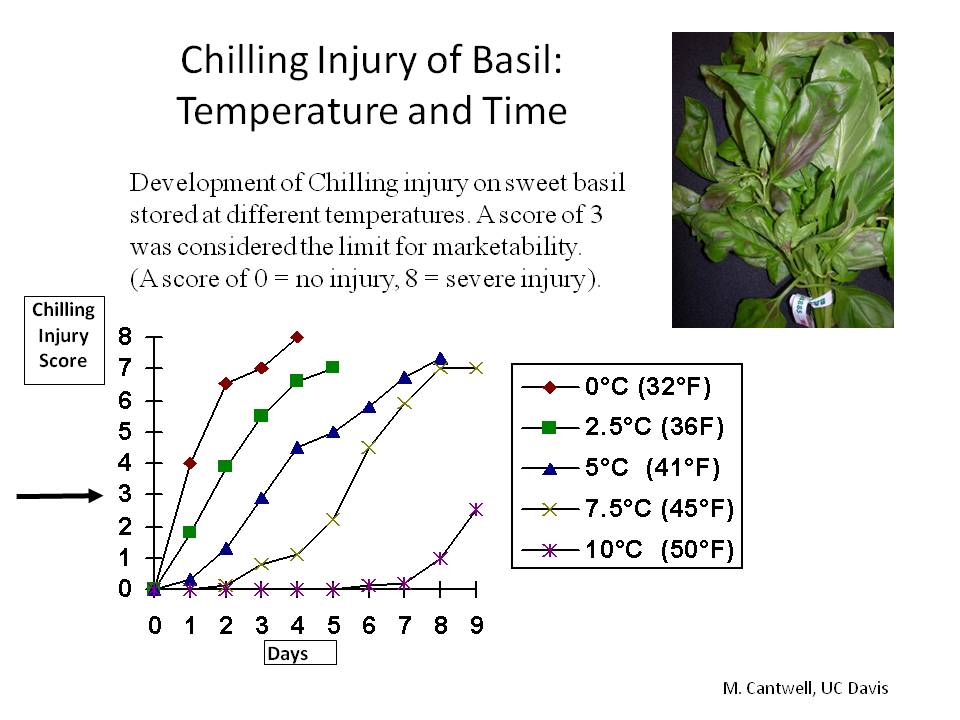
Title: Chilling Injury of Basil (Genovese) - Temperature and Time. Photo Credit: Marita Cantwell, UC Davis |
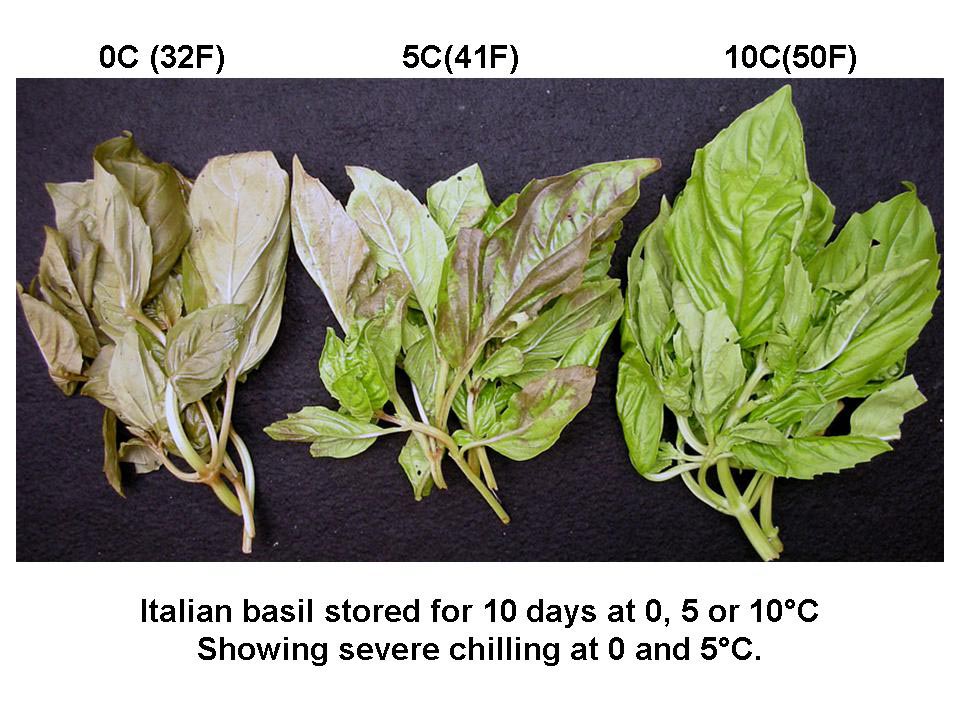
Title: Chilling Injury vs Temperature on Basil. Photo Credit: Marita Cantwell, UC Davis |
Title: Effect of Ethylene on Mint. Photo Credit: Marita Cantwell, UC Davis |
Title: Effect of Ethylene on Mitsuba. Photo Credit: Marita Cantwell, UC Davis |
Title: Effects of Ethylene on Parsley. Photo Credit: Marita Cantwell, UC Davis |
Title: Gai-lan Stored in Air. Photo Credit: Marita Cantwell, UC Davis |
Title: Temperature Effect on Arugula. Photo Credit: Marita Cantwell, UC Davis |
Title: Temperature Effect on Chives. Photo Credit: Marita Cantwell, UC Davis |
Title: Temperature Effect on Cilantro. Photo Credit: Marita Cantwell, UC Davis |
Title: Temperature Effect on Young Dill. Photo Credit: Marita Cantwell, UC Davis |
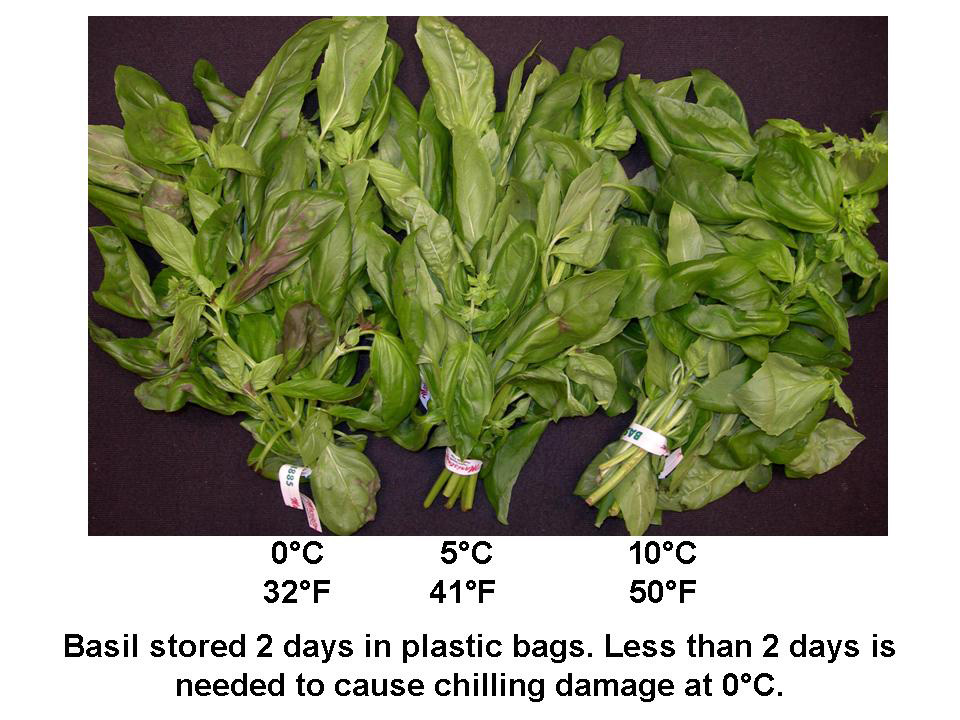
Title: Temperature Effects on Basil. Photo Credit: Marita Cantwell, UC Davis |
Physiological and Physical Disorders
Chilling Injury. Basil and shiso are the only chilling sensitive fresh culinary herbs. Chilling symptoms include browning of the leaves and growing tip, bronzing of the leaf veins, and loss of the glossy appearance of the leaves. The figure below shows the time need to have visible chilling symptoms when basil is stored at different temperatures.
Days
Development of chilling injury on sweet Italian basil stored at different temperatures. A score of 3 was considered the limit for commercial acceptability (A score of 0 = no injury, 8 = severe injury).
Damage to the herb leaves at harvest can lead to discoloration and increased susceptibility to decay.
Freezing Injury. Freeze damage in fresh herbs will appear as darkened translucent or water-soaked areas which will deteriorate rapidly after thawing. Freeze damage can occur on dill stored at -0.7°C (30.7°F), on chives at -0.9°C (30.4°F), and on parsley at -1.1°C (30.0°F).


Pathological Disorders
Fresh culinary herbs can be attacked by the same bacteria and fungi that infect other leafy green products. Bacterial soft-rots are caused by numerous bacteria species and result in a slimy breakdown of the infected tissue. Soft-rots may follow fungal infections. Trimming older leaves, rapid cooling and low temperature storage reduce development of bacterial soft-rots. Water spraying at retail may favor bacterial growth. Fungal pathogens may also lead to a watery breakdown of herb tissues (watery soft-rot caused by Sclerotinia for example) but are distinguished from bacterial soft-rots by the development of spores. Gray mold rot caused by Botrytis cinerea can occur commonly on basil and shiso. Trimming and low temperatures also reduce the severity of these rots.
References
References from scientifically validated sources will be added in the future.