




Product description
Maturity and Quality
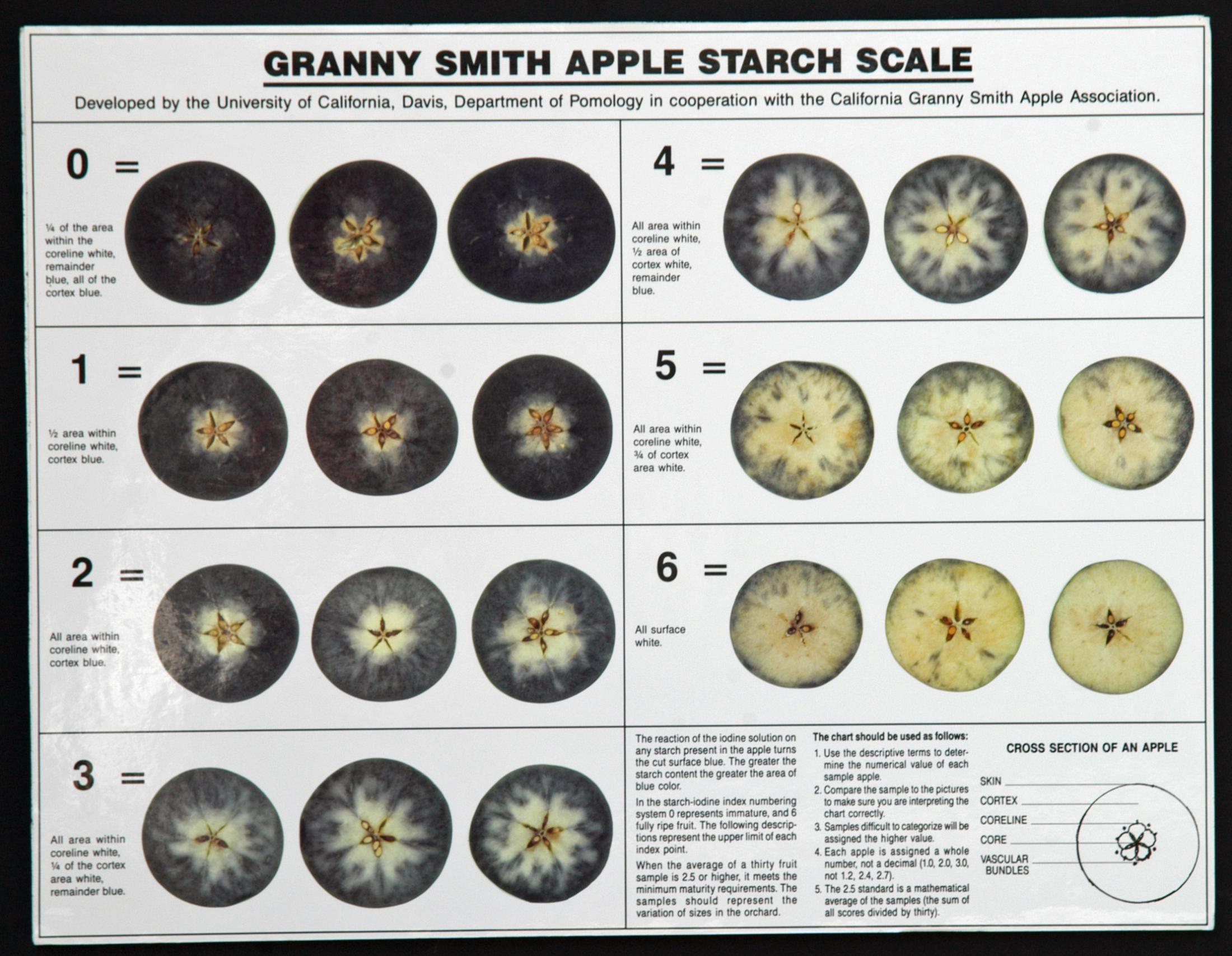
Average starch score for a sample of 30 apples equal to or greater than 2.5 on a 0 to 6 scale, based on the percentage of the core and cortex areas stained dark blue when dipped in the iodine - potassium iodide solution.
- Flavor, including soluble solids (12% or higher), titratable acidity (0.75% or lower) and flavor volatiles
- To improve eating quality, early season fruit can be conditioned with an ethylene treatment at 100 ppm for 24 hours at 20°C (68°F) for immediate marketing
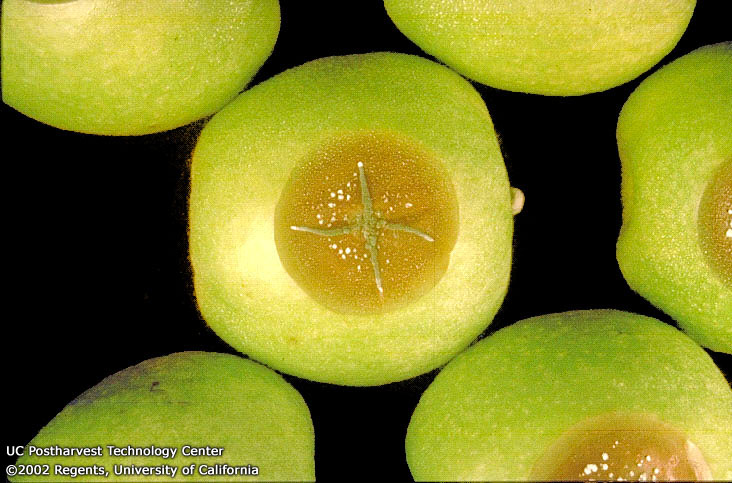
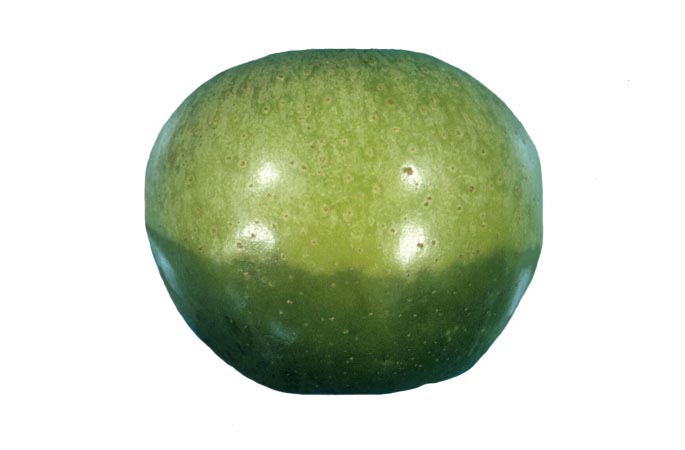
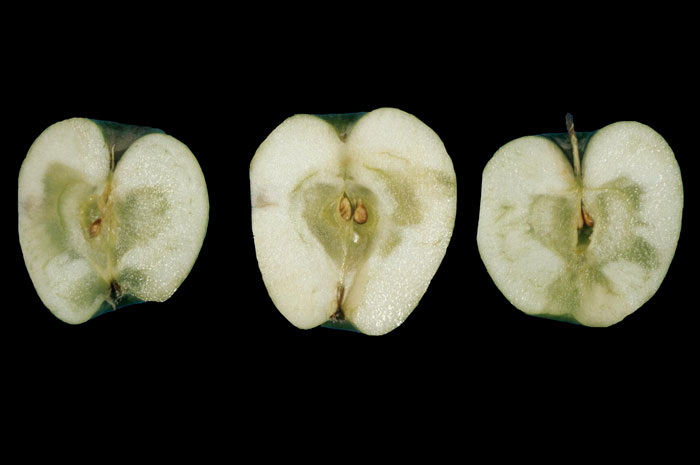
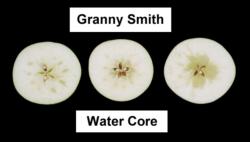
- Freedom from defects such as bruising, stem or blossom-end cracks, bitter pit, insect injury and watercore
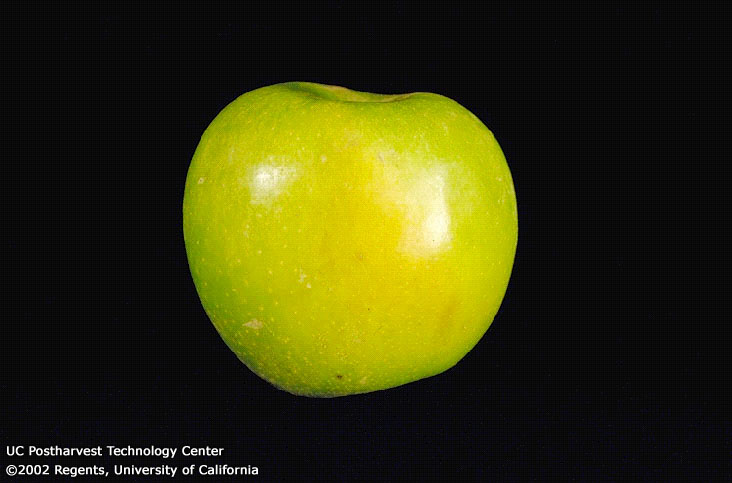
- Deep green color and absence of blush and/or sunburn (yellow or brown spots)
Postharvest Handling and Storage
0.5 ± 0.5°C (33 ± 1°F).
Freezing point: -1.5°C (29.3°F).
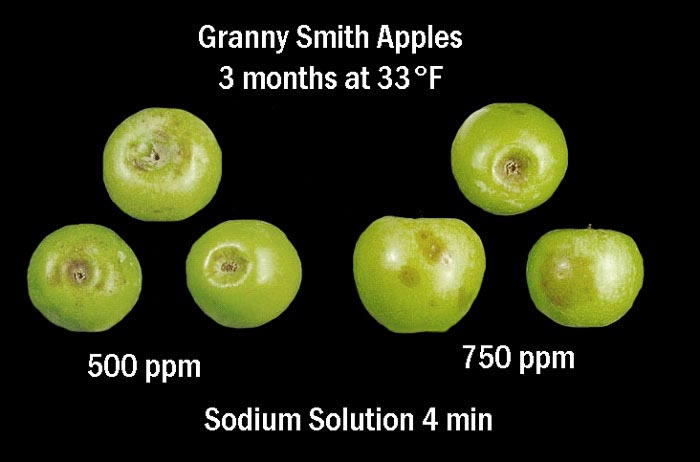
Some reports indicate that 0°C (32°F) can result in low temperature (chilling) injury in some seasons.
90-95%
2 to 4 ml/kg·hr at 0.5 °C (33°F)
To calculate heat production multiply ml CO2/kg·hr by 440 to get Btu/ton/ day or by 122 to get kcal/metric ton/day.
1 to 6 µl/kg·hr at 0.5°C (33°F)
- Ethylene can accelerate senescence and loss of firmness
- Removal of ethylene may reduce susceptibility to scald
The following atmosphere has been successful for Granny Smith apples: 1.5% oxygen + 1.0% carbon dioxide.
- Maintains firmness and titratable acidity
- Reduces susceptibility to bitter pit and storage scald
Physiological and Physical Disorders
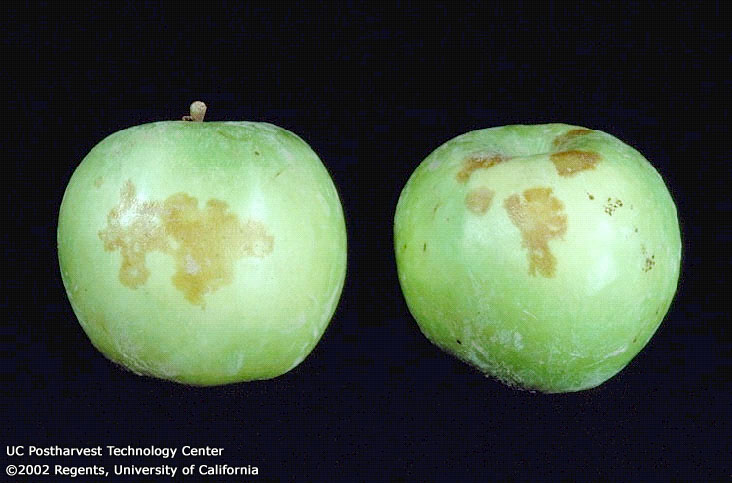
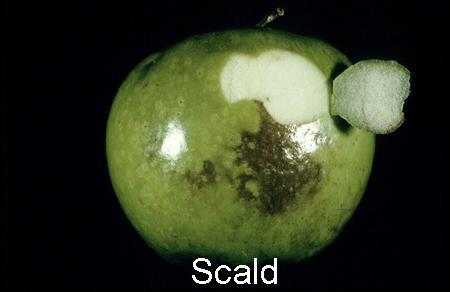
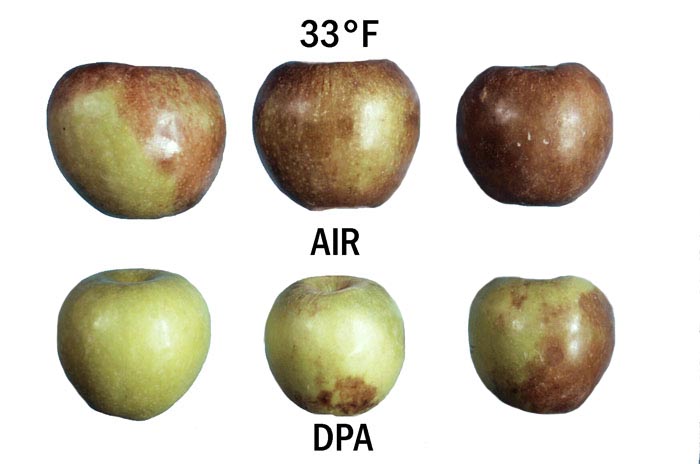
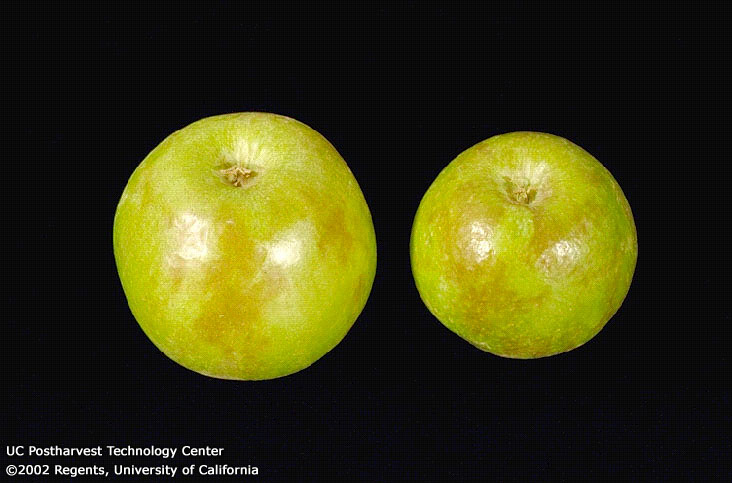
Storage Scald. Granny Smith apples are very susceptible to storage scald especially when grown in hot dry climates such as much of California. Diphenylamine (DPA) drench before storage is recommended, especially for storage beyond 3 months. CA storage can reduce scald incidence and severity, and reducing ethylene levels in storage also reduces scald development. The lower the oxygen concentration used, the better the scald control (be sure to determine fruit tolerance to low oxygen first). Oxygen at 0.7% may give good scald control. Early season or low maturity fruit is more susceptible to scald.
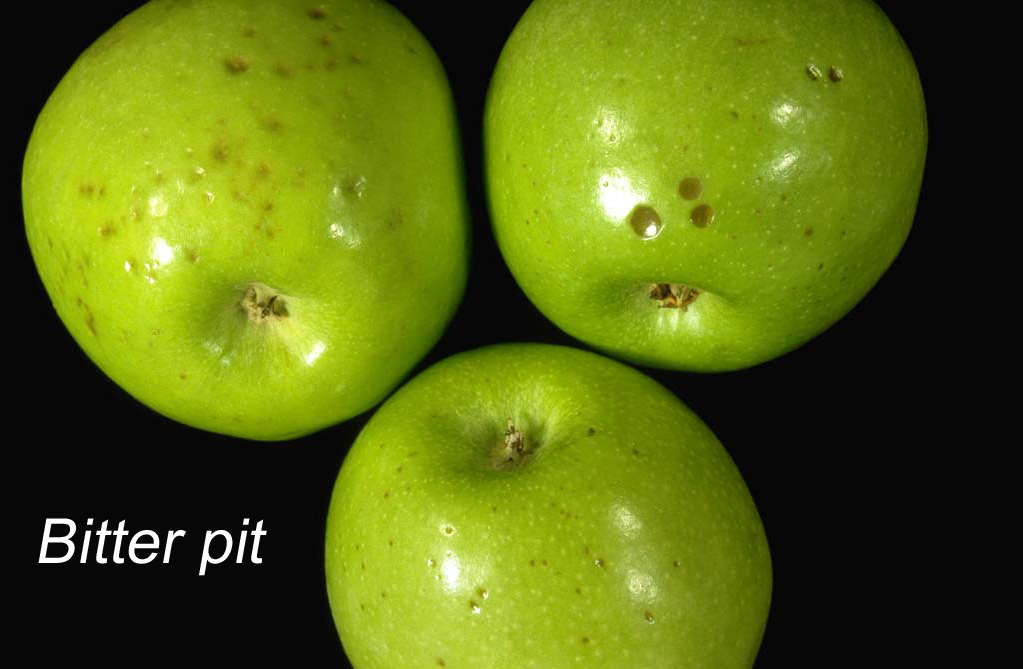
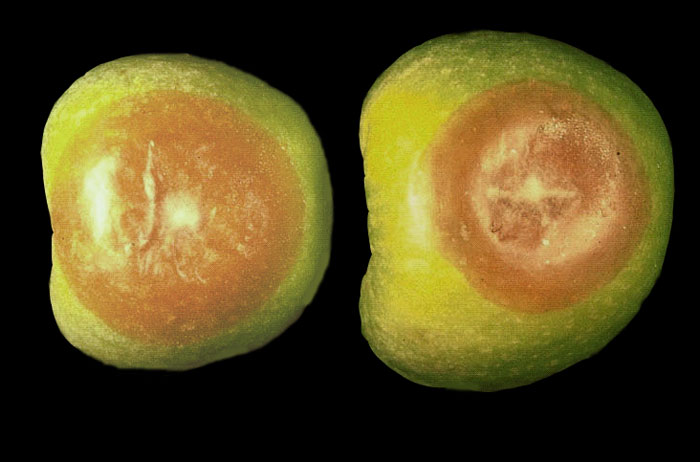
Bitter Pit. Granny Smith apples are very susceptible to bitter pit. Large fruit from young, vigorous trees are most susceptible. Preharvest calcium sprays are most effective to reduce bitter pit. Postharvest calcium dips are also beneficial.
Calcium rates for postharvest dips:
- 3 to 4% - solid flakes (77% CaCl2)
- 2 to 3% - calcium chloride (CaCl2)
- 0.7 to 1% -calcium ion (Ca+2)
Pathological Disorders
Gray Mold, Blue Mold. These decay-causing pathogens can be controlled by avoiding fruit injury, sanitizing water systems with chlorine and cooling fruit quickly.
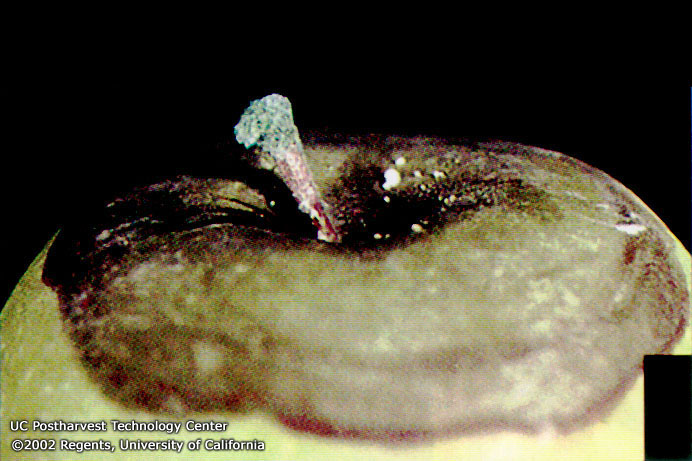
Mucor rot. Some orchards have Mucor organisms in the soil. Sanitation to keep soil out of drench water is important. Do not place fruit from orchard floor into storage bins. Chlorine will not control this organism and there are no effective fungicides. Mucor continues to grow slowly even at 0°C (32°F).
References
References from scientifically validated sources will be added in the future.